How do you raise a mortgage score 20 points fast without damaging the file?
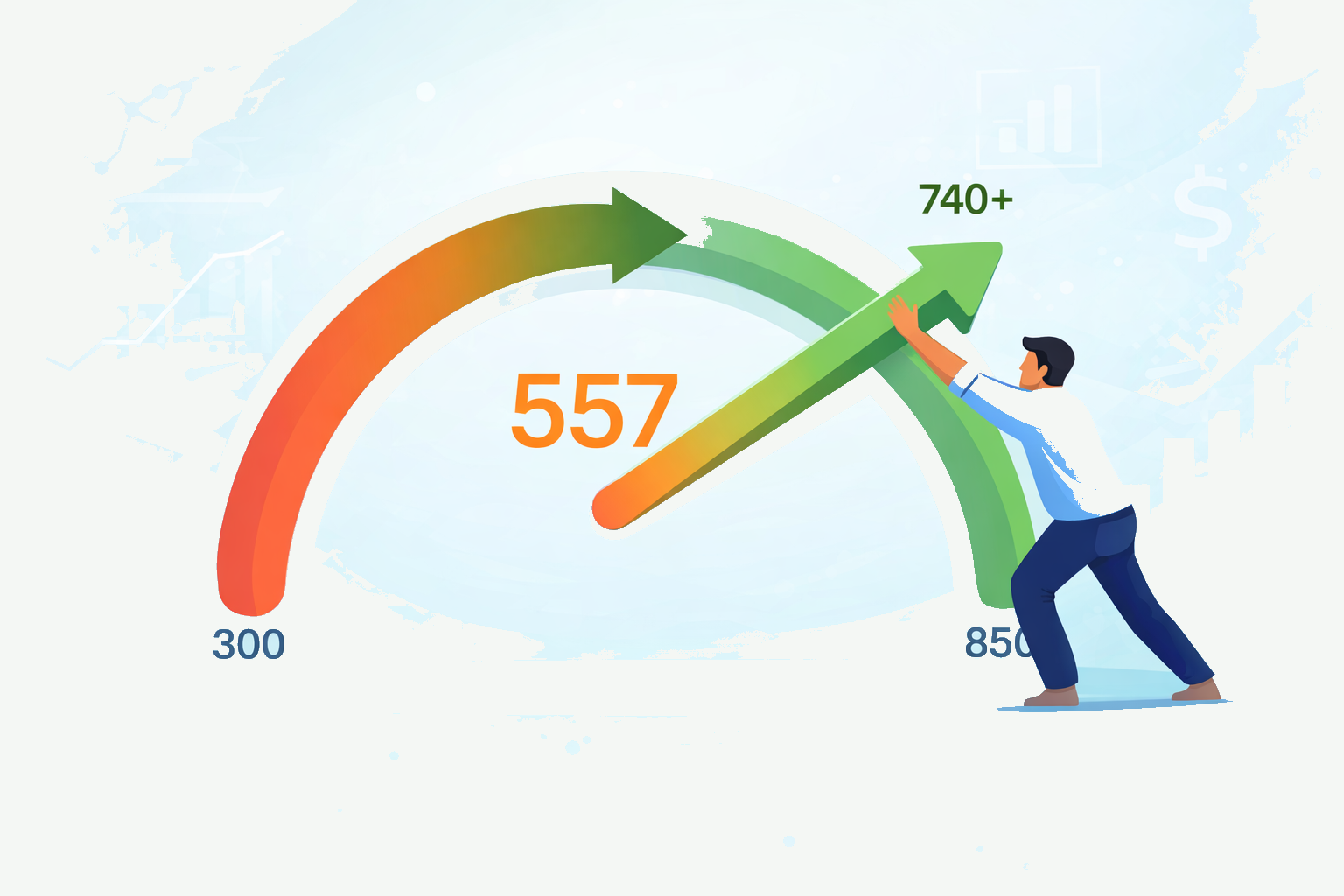
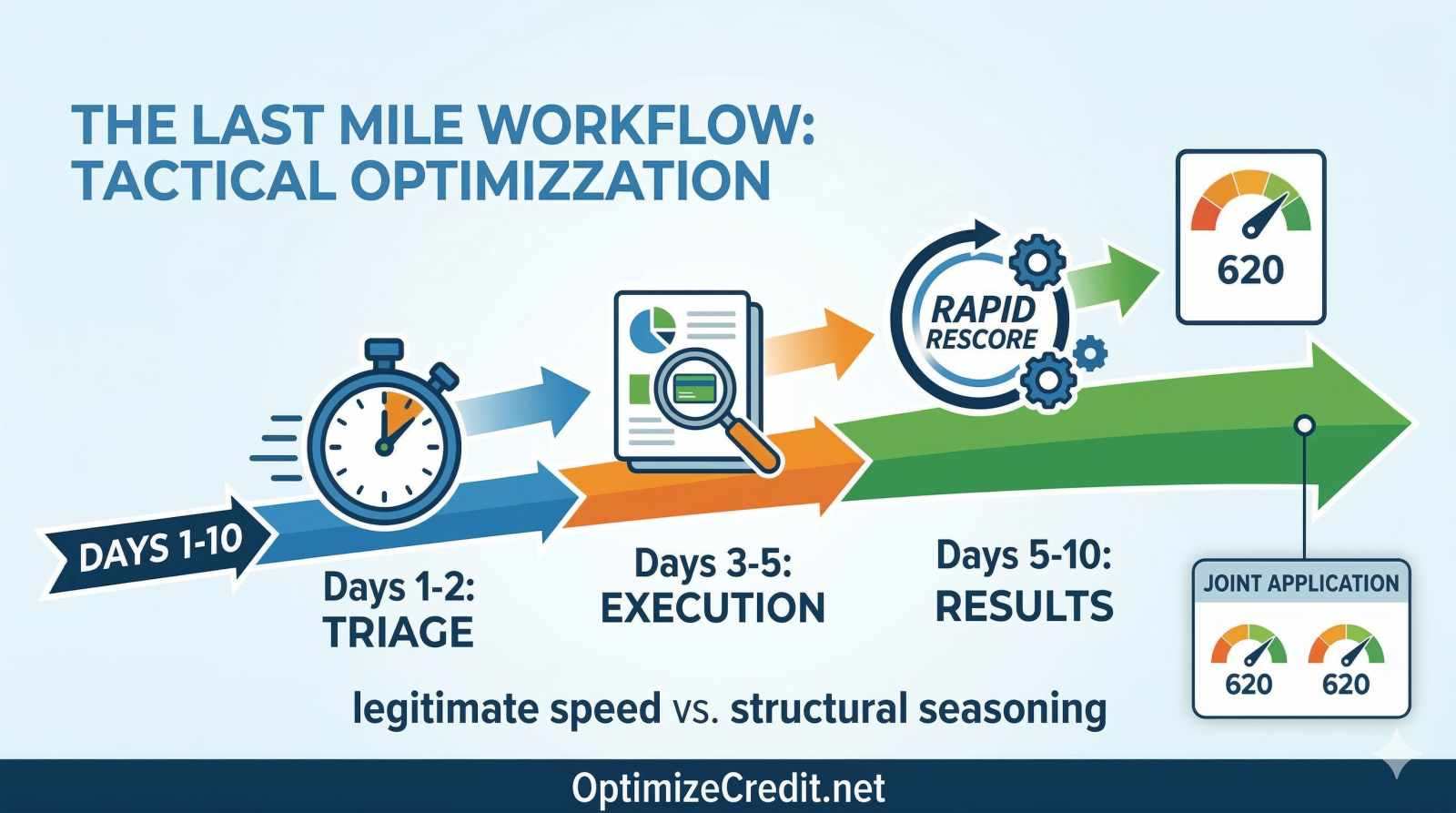
The last mile of mortgage credit is where pricing and eligibility are won or lost. When a borrower is within 20 points of a critical threshold such as 620, 680, or 740, the strategy must shift from long-term credit building to tactical file optimization. The optimizer can identify whether utilization cleanup, dispute resolution, or reporting-cycle timing is the fastest lever for a given file. By correcting bureau errors, optimizing statement-date balances, and using tools such as Rapid Rescore, professionals can sometimes move a representative score across a pricing tier in as little as 5 to 10 business days without destabilizing the underwriting profile.
Why the last mile matters so much in mortgage lending
The last mile is where eligibility and pricing are won or lost.
When a borrower is near 620, the issue is often access. When the borrower is near 680, the issue can include PMI or pricing friction. When the borrower is near 740, the issue is usually long-term borrowing cost. To see exactly how much those 20 points can cost over a 30-year loan, read Mortgage Rate Math.
That is why "only 20 points" can matter so much. A small move may cross a real threshold. If it does not, the file may not change in a meaningful way.
What score should you actually be trying to move?
Borrowers often chase the wrong number.
The threshold that matters is usually not the consumer-app score. It is the mortgage score the lender is actually using. If the borrower is looking at a consumer app score and the lender is underwriting off a different mortgage model, the strategy can go wrong before it even starts.
Before any tactical work begins, confirm:
- The actual mortgage score model
- The threshold being pursued
- Whether the objective is approval, pricing, PMI, or all three
- Whether the file is solo or joint
Which borrower matters most on a joint application?
For joint borrowers, strategy usually follows the weaker representative score.
If one borrower has a much stronger score and the other sits near the threshold, the tactical question is not how to improve the strong file. It is what can move the weaker representative score safely and quickly.
That is why professionals should begin with the weaker borrower in joint threshold cases.
Is the file tactical or structural?
This distinction drives the entire tactical plan. The optimizer can help diagnose which category a file falls into and recommend the fastest path forward.
Tactical file
A tactical file has one or two suppressors that can move quickly:
- High reported revolving utilization
- One card carrying too much of the total risk signal
- A recent payoff that has not reported yet
- A bureau error or stale tradeline
- A score drop caused by statement-date timing rather than deeper weakness
Structural file
A structural file usually needs time:
- Thin primary depth
- Weak account age
- Recent inquiry load
- Recent new accounts
- Derogatory history
- Too many intertwined weaknesses to fix in one cycle
The mistake is treating a structural file like a tactical one.
What are the fastest legitimate ways to raise a mortgage score before application?
1. Lower reported revolving balances before the statement date
This is often the cleanest and fastest lever. The key is not just paying balances. The key is making sure lower balances are what the bureau receives. Statement dates matter because they determine what gets reported.
2. Fix one heavily loaded card first
A single highly utilized card can suppress the file even when overall utilization looks less dramatic.
3. Correct genuine bureau errors
A duplicate collection, stale balance, or wrong reporting status can be worth meaningful points on a borderline file. Start by pulling all three reports from AnnualCreditReport.com and identifying discrepancies. File disputes with supporting documentation directly with the bureau showing the error. Common correctable errors include:
- Duplicate collection entries for the same debt
- Balances that were paid but still show as outstanding
- Accounts incorrectly marked as delinquent
- Tradelines belonging to another consumer
For borderline files, even one corrected error can be enough to cross a threshold.
4. Use Rapid Rescore when the file supports it
Rapid Rescore is a broker- or lender-initiated service that uses third-party documentation to update a mortgage file in roughly 3 to 5 business days. Borrowers usually cannot trigger it by themselves. It belongs in active mortgage workflows where the documentation is real, the timing matters, and the expected change is large enough to justify the effort.
What is Rapid Rescore and when can it help a borderline mortgage file?
Rapid Rescore is a broker- or lender-initiated service used during active mortgage work; borrowers generally cannot order it directly themselves. It helps when the file already changed in the real world, but the bureaus have not caught up fast enough.
Examples:
- Revolving balances were paid down
- A reporting mistake was corrected
- A payoff or update exists and is documented
It does not create a fake score boost. It accelerates recognition of a legitimate update.
Why statement-date timing belongs in last-mile strategy
Last-mile work is reporting-cycle math. If the borrower pays after the statement already cut, the lower balance may not help until the next reporting cycle. That is why statement dates, reporting dates, and timing windows matter so much in threshold work. For a deeper look at how statement closing dates, bureau posting, and Metro 2 formatting create the reporting chain, see Statement Date vs Bureau Update.
A tactical plan that ignores reporting dates is incomplete.
Why 680 matters more than many people realize
620 and 740 get most of the attention, but 680 often matters more than casual consumer content suggests.
In real files, 680 can affect PMI or broader pricing behavior even when the borrower is already above a minimum eligibility line. That is why professionals should not reduce the conversation to "approved or denied." Borderline files are often pricing files.
Should you open a new credit card to fix a borderline mortgage score?
Usually no.
Opening a new account near mortgage application can:
- Add a hard inquiry
- Reduce average age
- Create fresh underwriting questions
- Solve the wrong problem if the real issue is statement-date utilization
New-account strategies belong much more often to structural rebuilding than to last-mile rescue.
When does an authorized user tradeline make sense in the last mile?
Only when the optimizer identifies utilization or revolving depth as the primary suppressor rather than derogatory history. In that narrow scenario, an AU tradeline can change the denominator quickly without a new hard inquiry. But it is one option among several. The professional question is whether a tradeline, a dispute correction, or a utilization paydown is the fastest lever for the specific file.
A practical 5-to-10 business day workflow
Day 1 to 2: Diagnose
- Confirm the actual mortgage score and target threshold
- Identify the weaker representative score on joint files
- Separate tactical suppressors from structural weakness
- Pull all three bureau reports and flag discrepancies
Day 2 to 4: Execute
- Execute utilization cleanup on the highest-impact card first
- Gather documentation for any genuine bureau correction
- File disputes with supporting evidence for confirmed errors
- Determine whether Rapid Rescore is justified
- Document the source of any large payoff funds, because a sudden score jump is not useful if the underwriter cannot verify where the money came from
Day 3 to 5: Accelerate
- Initiate Rapid Rescore if the lender workflow supports it
- Follow up on dispute submissions
- Avoid new inquiries, new cards, and unnecessary cash movement
Day 5 to 10: Reassess
- Reassess whether the representative score moved enough to matter
- Check dispute outcomes against bureau files
- Decide whether to proceed, wait, restructure, or change product strategy
When chasing the threshold is the wrong move
Sometimes the right answer is not to force the file across the line.
That is usually true when:
- The file is structurally weak
- The likely score movement is too small
- The actions required would create new underwriting friction
- A different loan structure solves more than a score move would
The last mile rewards discipline, not panic.
Get Your Personalized Credit Roadmap
Upload your credit report and our Credit Analyzer identifies exactly what is holding your score back and gives you a step-by-step 90-day plan to reach 740+.
Trusted by 500+ successful placements and excellent reviews on TrustPilot ★★★★★
Analyze My Credit Free →