Bankruptcy feels permanent — but it is not
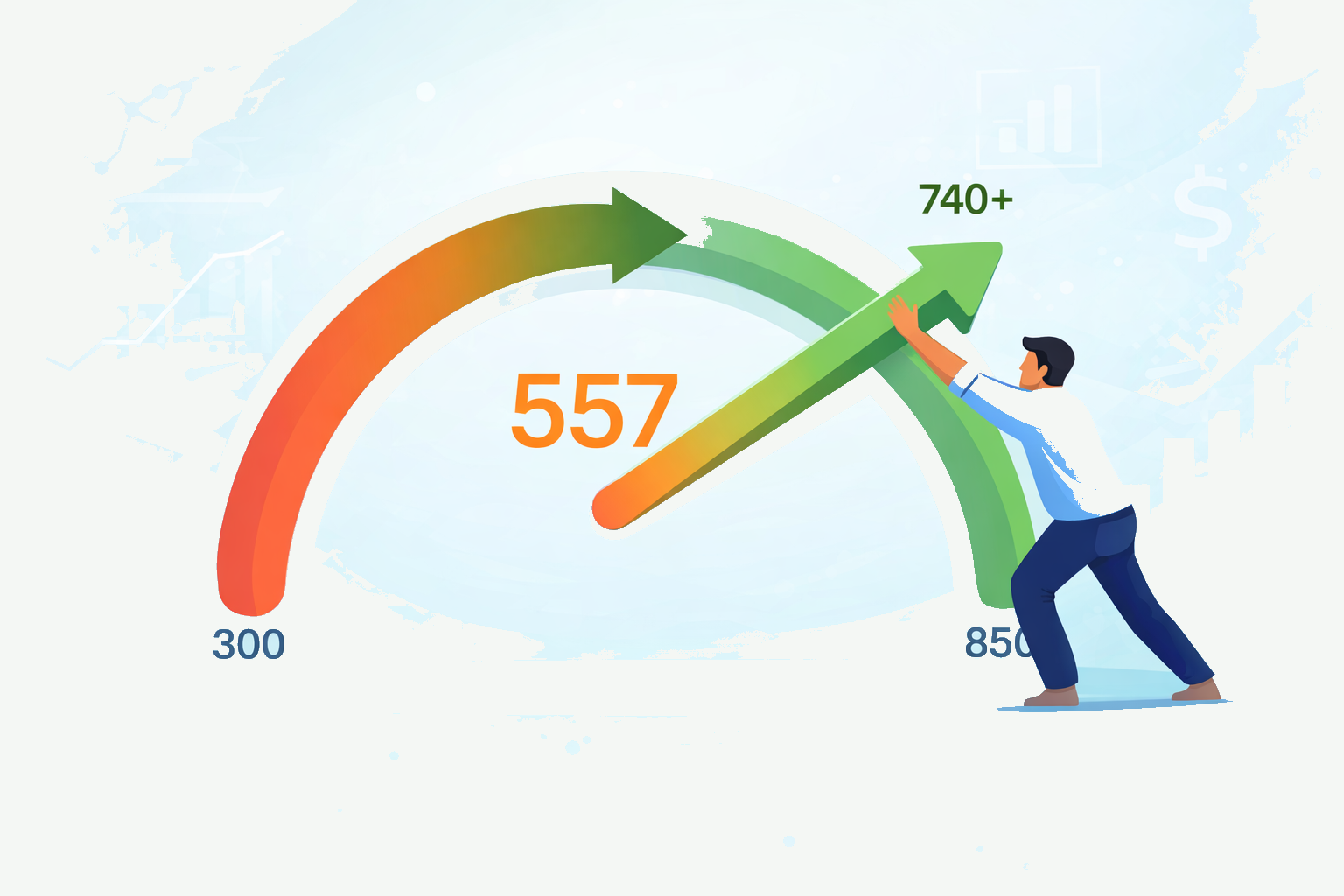
Bankruptcy feels permanent when you are inside it. On a credit report, though, it is not permanent. It is a major derogatory event with a fixed reporting life, a heavy early impact, and a gradually weakening effect as newer positive data replaces older damage. The biggest mistake people make after bankruptcy is assuming they have to wait seven or ten years for the record to disappear before they can rebuild. That is not how recovery actually works. Experian says Chapter 7 may remain on your credit report for up to 10 years from filing, while Chapter 13 may remain for up to 7 years from filing, but the scoring impact fades over time.
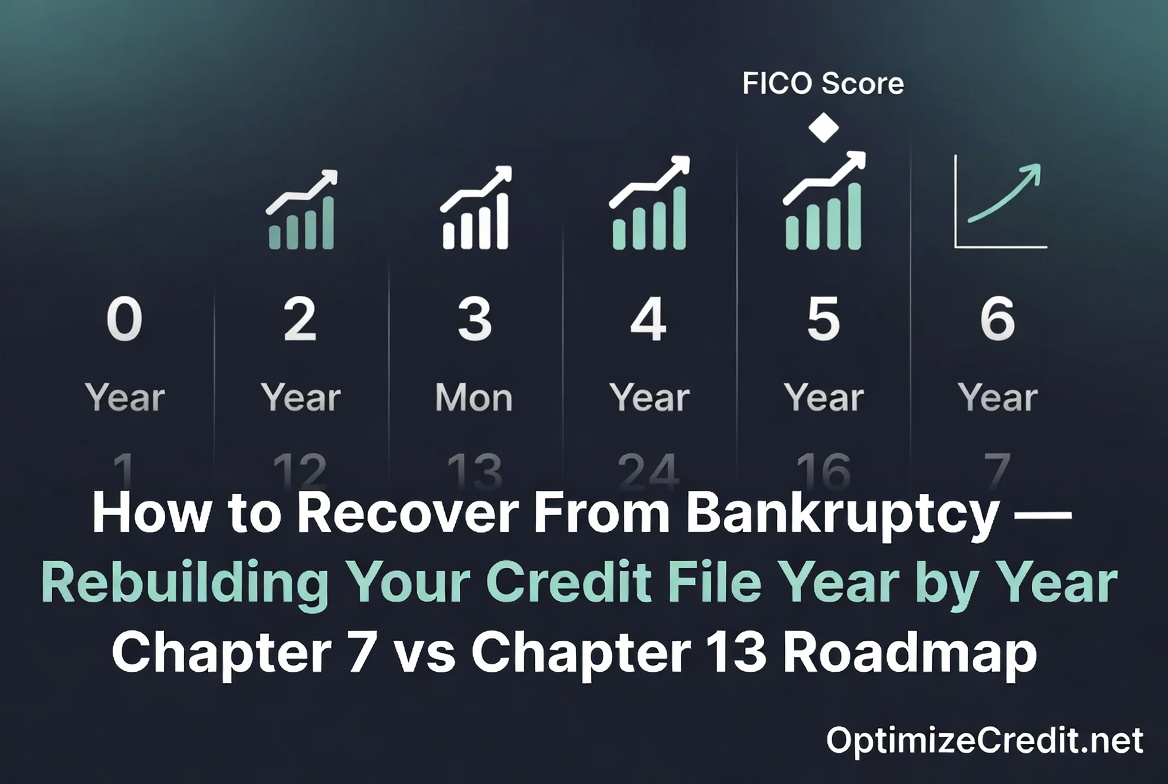
The practical recovery path is year-by-year. Year 0 to 1 is about fixing the file after discharge. Year 1 to 2 is about building new positive revolving and installment history. Year 2 to 4 is where many borrowers become meaningfully financeable again. Year 4 to 7 is where a well-managed file may look far stronger than most people expect, even before the bankruptcy disappears. Mortgage eligibility windows confirm this. Fannie Mae's conventional framework and HUD's FHA guidance both allow re-entry well before the bankruptcy item falls off the report.
If you want the companion article that covers the broader timing logic for negative events, the most relevant internal read is Credit Score Recovery Timelines.
A quick note on score versions and lenders
One place bankruptcy articles often drift off course is score-version talk. The rebuilding principles in this article apply broadly, but not every lender uses the same score model. myFICO says lenders may use a different FICO version than the one a consumer sees, or even another type of score altogether. Mortgage lenders typically use the older classic mortgage FICO versions — FICO Score 5 (Equifax), FICO Score 4 (TransUnion), and FICO Score 2 (Experian) — while other lenders may use base FICO 8 or industry-specific versions depending on product type. That matters because your "recovery score" is never just one number.
The timeline at a glance
| Period | Main goal | What matters most |
|---|---|---|
| Year 0–1 | Fix post-discharge reporting | Zero balances, proper bankruptcy notation, no lingering misreporting |
| Year 1–2 | Add new positive tradelines | Secured card, credit-builder loan, low utilization, perfect payments |
| Year 2–4 | Expand cautiously | Unsecured cards, installment depth, FHA windows may open |
| Year 4–7 | Mature the file | More seasoning, cleaner utilization, conventional windows may open |
Year 0 to 1: clean up the report after discharge
This is the most important operational phase. The bankruptcy discharge changes your legal obligation, but the credit reports still have to be updated correctly. The U.S. Courts explains that a discharge means you are no longer legally required to pay discharged debts, and the discharge order bars creditors from trying to collect them. That legal result must be reflected accurately in the credit file.
After discharge, pull all three reports from AnnualCreditReport.com, the official site designated by federal law. AnnualCreditReport also reminds consumers that you do not have just one report and one score; you have several, and they may differ.
Your checklist is simple:
- Debts included in the bankruptcy should show $0 owed
- The status should say included in bankruptcy or discharged in bankruptcy
- Excluded or nondischargeable debts should not be mislabeled as discharged
- Old included accounts should not keep updating as though they are still actively delinquent
Experian says accounts covered by the bankruptcy should be labeled appropriately and show zero outstanding balances after the discharge updates. That is the first real rebuilding milestone.
What scores often do in Year 0 to 1
There is no universal "80-point drop" or "180-point rebound" rule. What we can say safely is that many files begin to stabilize once discharged accounts stop updating negatively and the report becomes accurate. Experian says there is no fixed timeline for score recovery, but the impact usually lessens over time, especially if you start rebuilding right away.
Year 1 to 2: rebuild with small, boring, positive accounts
This is where the real repair begins. The goal is not to look flashy. The goal is to add clean new data.
Experian's rebuilding guidance consistently points to three common tools after bankruptcy: secured cards, credit-builder loans, and in some cases becoming an authorized user on a well-managed account. Those are not miracle hacks. They are simply the safest ways to replace lost positive history with new positive history.
Best tools in this phase
Secured card. A secured card is usually the easiest first revolving tradeline after bankruptcy. Use it lightly and keep the reported balance low. The point is not spending power. The point is a fresh revolving line that reports on time every month.
Credit-builder loan. A credit-builder loan helps add installment history, which gives the file more depth and better mix. It is often a safer way to add an installment tradeline than taking on a large real loan too early.
Authorized-user account. An AU account can help if the primary account is old, clean, and lightly used. But it should support a rebuild, not carry the whole rebuild. Mortgage underwriting in particular may look more carefully at whether the borrower has meaningful primary tradelines of their own. That is one reason AU should be treated as a supplement, not the foundation.
Year 2 to 4: become meaningfully financeable again
This is the bridge phase. You are no longer just "recovering from bankruptcy." You are starting to look like a borrower with re-established credit.
For mortgage timing, this is where the big milestone appears. Fannie Mae's selling guide says the standard conventional waiting period after Chapter 7 is 4 years from discharge, while Chapter 13 is 2 years from discharge or 4 years from dismissal. FHA is more forgiving. HUD says a Chapter 7 bankruptcy generally requires 2 years from discharge, and Chapter 13 may be possible after at least 12 months of the payout period with on-time payments and required court permission where applicable.
This is also where many borrowers graduate from secured cards to unsecured cards. That is not guaranteed, but it is a common result when the file has 12 to 24 months of fresh clean history and manageable utilization. Experian supports the general point that rebuilding progress becomes more visible over time when positive information accumulates.
Year 4 to 7: conventional eligibility and mature-file recovery
By this stage, the bankruptcy is no longer recent. It is still visible, but it is older, and the file is being judged more by what you have done since. That is why the best bankruptcy recoveries start to look surprisingly normal in years 4 through 7.
Fannie Mae's conventional waiting periods mean many borrowers are now back inside conventional mortgage windows, assuming the rest of the file is strong enough. At the same time, the bankruptcy itself is aging further, which reduces its practical weight even though it is still present. Experian says a good credit score is possible before the bankruptcy falls off if you rebuild promptly and manage credit well.
This is the stage where people often start seeing the difference between "bankruptcy still on report" and "bankruptcy still controlling my life." Those are not the same thing.
Myths that slow recovery
Myth 1: "I have to wait until the bankruptcy falls off to rebuild"
No. That wastes the fastest part of the recovery curve. Positive new data matters long before the reporting clock expires. Experian explicitly says recovery can begin much sooner.
Myth 2: "Once the bankruptcy is discharged, the reports fix themselves automatically"
Not always. Included debts should update correctly, but errors happen. That is why the Year 0 to 1 audit matters so much. Experian's guidance on post-bankruptcy review supports checking all three reports after discharge. If you find errors, the credit score debugging guide walks through how to identify and address reporting problems systematically.
Myth 3: "One score tells me everything"
No. myFICO says lenders may use different FICO versions or another score entirely, and mortgage lending usually uses the older classic mortgage FICO versions. So recovery should be built around file quality, not one app number.
Bottom line
Bankruptcy is both a catastrophic event and a reset. Recovery is a system, not a mood. The system is not as numerically predictable as many articles imply, and the lender score-selection story is messier than one model. Different lenders use different score versions, and mortgage lending often relies on older classic mortgage FICO scores rather than the base scores consumers monitor most.
So the smartest way to recover from bankruptcy is not to chase a perfect score overnight. It is to get the file accurate, add clean tradelines gradually, keep utilization low, avoid fresh mistakes, and let time work on your side. The record stays for years. The damage does not stay frozen at Day 1.
For a broader look at how different negative events age and how recovery timelines compare, see the troubleshooting hub.
Get Your Personalized Credit Roadmap
Upload your credit report and our Credit Analyzer identifies what may be affecting your score and provides a step-by-step, report-based action plan.
Analyze My Credit Free →