If you are trying to qualify for a mortgage, tradelines matter in a more mechanical way than most consumers realize. Mortgage underwriting is not just "What is your score today?" It is also: How many accounts are reporting, how old are they, what type are they, how recently did you open them, how heavily are you using them, and do they show a pattern of paying as agreed? Fannie Mae's credit-assessment framework itself is organized around number and age of accounts, payment history, previous mortgage payment history, recent inquiries, credit utilization, authorized users, and significant derogatory events. That is a good summary of what conventional underwriters actually care about.
A borrower can have a 700-plus score and still be weak for mortgage purposes if the file is thin, overly dependent on authorized-user history, or recently changed. A borrower can also have a more modest score and still get approved if the file shows real depth, stable payment behavior, manageable utilization, and clean mortgage history. FHA, conventional conforming, and jumbo all evaluate risk differently, but none of them treat "score only" as the whole story. Understanding how credit professionals approach these problems can help set the right expectations before you apply.
What underwriters actually look for in tradelines
1. Depth, not just score
The first question is whether the borrower has enough real credit history to support the score. Underwriters care about the number of accounts, the age of those accounts, and whether the borrower has demonstrated the ability to manage credit over time. Fannie Mae's conventional credit framework explicitly breaks credit review into number and age of accounts, payment history, inquiries, utilization, and derogatory history. That is why a thin 712 built on one authorized-user card and one small installment loan can feel much weaker in underwriting than a 682 built on several well-managed primary tradelines.
2. Type of tradelines
Underwriters generally prefer to see a file that is not built on one account type only. A borrower with only one credit card may score fine in an app, but a mortgage file looks stronger when the credit history shows more than a single shallow line. Fannie's manual-underwriting and nontraditional-credit sections exist for exactly this reason: if a borrower has no score or limited traditional credit history, the lender may need to establish acceptable nontraditional credit history instead of relying on a thin traditional file alone.
3. Inquiries and recently opened debt
Fannie Mae says recent inquiries can indicate that a borrower has been actively seeking new credit, and that many recent unrelated inquiries represent higher credit risk. When the report shows recent inquiries, the lender must confirm the borrower did not obtain additional credit that is missing from the application or credit report. In plain English: if you opened cards, took financing, or shopped for unrelated debt right before applying, underwriting will want to know about it.
4. Utilization and maxed-out cards
Fannie Mae's credit-utilization guidance is blunt: when manually underwriting, lenders must review whether the borrower has a pattern of using revolving accounts up to or near the limit, because that is credit-risk indicative. Low balances-to-limits ratios generally represent lower risk; high balances-to-limits ratios represent higher risk. This is why maxing out cards during the mortgage process is one of the fastest ways to weaken an otherwise approvable file.
5. Derogatory history, especially mortgage derogatories
General derogatories matter, but prior mortgage behavior matters even more. Fannie Mae says the lender must review the borrower's previous mortgage delinquency for severity and recency, and that loans with excessive prior mortgage delinquencies are not eligible for delivery to Fannie Mae. If your file shows a recent serious mortgage late, that is a bigger underwriting problem than a generic credit-card blemish from years ago.
Thin files can get denied even at 700+
This is one of the most misunderstood parts of mortgage credit.
A 700-plus score can still be thin if it was generated from too little real data. That can happen when the file has very few primary accounts, very short account age, limited payment depth, or heavy reliance on authorized-user history. Fannie Mae's guidance makes clear that if a borrower has no score or limited traditional credit history, the lender may need to establish acceptable nontraditional credit history, and the lender must first check all three major credit repositories to verify the borrower's history. In other words, a nice score does not eliminate the need for enough believable credit depth.
This is where people run into the practical "three tradeline rule." It is not a universal Fannie/Freddie line that says every scored file must have exactly three open accounts. But in mortgage operations, three tradelines or credit references with at least 12 months of history is a very common benchmark because both FHA's nontraditional-credit framework and Fannie's manual nontraditional-credit framework are built around that concept. FHA legacy guidance says sufficient credit references should include three credit references, including at least one stronger Group I reference, and should cover the most recent 12 months. Fannie manual nontraditional-credit rules require three credit references for each borrower without a credit score, with each reference documented for the most recent consecutive 12-month period.
So the mortgage-ops translation is this: even if your app score looks fine, a file with only one or two shallow tradelines may still feel underdeveloped to a lender or AUS reviewer.
FHA vs. conventional vs. jumbo: different floors, different scrutiny
FHA
FHA is often the most flexible on credit profile, but "flexible" does not mean casual. HUD says a TOTAL "Accept" means FHA will insure the loan without manual underwriting review unless a manual downgrade applies, while a TOTAL "Refer" means the loan must be manually underwritten by an FHA Direct Endorsement underwriter. HUD also states that all loans must still be underwritten under Handbook 4000.1 guidance; the scorecard does not replace underwriting judgment.
On score floors, HUD training materials reflect the current FHA minimum lending framework as 580+ for maximum 96.5% LTV, 500–579 for maximum 90% LTV, and below 500 ineligible. FHA is therefore more open to lower-score borrowers than much of the conventional market, but that does not mean tradeline depth stops mattering. In fact, HUD's own 2024 annual report shows the average FHA forward borrower credit score was 677 in FY 2024, which tells you FHA approvals are not dominated by ultra-low-score files.
Conventional conforming
Conventional conforming underwriting is more automated and more standardized, but not simpler. Fannie Mae requires the classic mortgage FICO versions for loans where scores are required, and its underwriting structure explicitly evaluates number and age of accounts, payment history, inquiries, utilization, authorized users, and significant derogatory events. That means conventional approvals often care deeply about whether the file looks like a real borrower-managed history rather than a thin score artifact. If the borrower lacks sufficient traditional history, Fannie's nontraditional-credit rules can come into play.
One nuance that gets lost online: the agency selling guides do not create a universal consumer-facing "620 and you are done" rule for every conventional situation. In practice, lenders often apply overlays, product minimums, reserve requirements, and AUS constraints. That is why two borrowers with the same score can get very different outcomes. Knowing the math behind how your rate is actually determined helps you see why score alone never tells the full story.
Jumbo
Jumbo is a different animal because it is non-conforming. FHFA says loans above the conforming loan limit are known as jumbo loans. The CFPB adds that non-conforming loans are less standardized and that eligibility, pricing, and features can vary widely by lender; for jumbo specifically, rules vary by lender and usually require good credit and a high down payment. That is why jumbo underwriters often care even more about deep primary tradelines, reserves, low utilization, and clean recent behavior. There is no single universal jumbo tradeline rule because jumbo is not governed by one agency AUS playbook the way conforming loans are.
The "three tradeline rule": useful benchmark, not universal law
A lot of mortgage advice online turns this into a hard rule. That is too sloppy.
A better way to say it is this: if your file is thin, manually underwritten, or dependent on nontraditional credit, three meaningful tradelines or credit references with 12 months of history is a very important benchmark. FHA legacy nontraditional guidance and Fannie manual nontraditional guidance both support that concept. But a scored DU or LPA file is not automatically denied just because the borrower does not literally have three open credit cards. What underwriters really want is enough depth, age, type, and payment history to make the file credible.
So if you are sitting on one brand-new card, one tiny installment loan, and one authorized-user account, your score might look prettier than your mortgage file actually is.
Authorized-user tradelines for mortgage approval
Authorized-user tradelines can help a score. They can also create underwriting questions.
Fannie Mae says DU does take authorized-user tradelines into account in its credit risk assessment, but the lender must review them to ensure they are an accurate reflection of the borrower's credit history. Fannie specifically tells lenders to look at the borrower's relationship to the owner, whether the borrower uses the account, and whether the borrower makes the payments — especially when the borrower has several AU accounts but only a few accounts of their own. To understand the mechanics of how AU tradelines interact with your file in the first place, see the AU tradeline effect guide.
For manual underwriting, Fannie is stricter: AU tradelines generally cannot be considered unless another borrower on the same mortgage owns the tradeline, or the borrower can document that they were the actual and sole payer of the monthly payment for at least the prior 12 months. That is a very different standard from "it shows on my credit report, so it counts."
Freddie Mac's Loan Product Advisor message updates make the same underlying point from a different angle. Freddie's feedback language says AU accounts may be acceptable only if the seller documents, for example, that another borrower or spouse owns the account, the borrower made the payments for the last 12 months, or the AU accounts have insignificant impact relative to the borrower's own tradelines based on number, age, type, size, and payment history. If the seller cannot document that, Freddie's messaging says the mortgage must be considered invalid for the automated assessment and manually underwritten.
The mortgage takeaway is simple: AU tradelines can help score, but underwriters may discount them if your own tradeline depth is weak.
DU vs. LP: different engines, similar mission
DU is Fannie Mae's Desktop Underwriter. LP usually refers to Freddie Mac's Loan Product Advisor, now branded LPA. Both are automated underwriting systems, and both are designed to evaluate mortgage credit risk from the report data and loan inputs. But they do not speak exactly the same language, and they do not always surface tradeline issues the same way.
Fannie's DU guidance explicitly discusses how DU analyzes credit report data and what lenders must do in response to findings messages. Freddie's manual-underwriting training emphasizes that the seller must evaluate the borrower's entire credit history and document that the borrower's credit reputation is acceptable. Freddie's AU messaging also focuses more explicitly on comparing AU accounts with the borrower's own tradelines. So in practice, a file can feel slightly different under DU versus LPA when authorized-user history or thin-file issues are present.
Timing: why two billing cycles before application is the safer window
This is a practical underwriting strategy, not a formal agency rule: if you are trying to improve tradeline depth or optimize balances, two full billing cycles before application is usually safer than doing anything at the last minute.
Why? Because mortgage lenders are looking at a current credit snapshot, recent inquiries, and recent reporting. Fannie says the credit report must list inquiries made in the previous 90 days, and lenders must confirm whether recent inquiries turned into new debt. If you open a new account, pay down balances, or become an authorized user, you usually want enough time for that change to actually report cleanly and stabilize before the mortgage pull.
Before applying, review your reports at AnnualCreditReport.com so you can see the same bureau data family that underwriting starts from.
What not to do during the mortgage process
Do not open new accounts unless the strategy is deliberate
Recent inquiries and recently opened accounts add risk and can trigger documentation requirements.
Do not close old revolving accounts casually
Closing older or high-limit accounts can reduce depth and worsen utilization, which can make a mortgage file weaker even if the score impact looks small at first. Fannie's utilization guidance treats high balances-to-limits as higher risk.
Do not max out cards or let statement balances spike
Mortgage underwriting does not care that you planned to pay it off next week if the statement already reported. High utilization is explicitly risk-indicative in Fannie's guide.
Do not assume authorized-user depth equals borrower-owned depth
If AU tradelines are doing most of the work, expect questions. Under both Fannie and Freddie policies, AU history can require extra review or be discounted in manual analysis. Working with a credit strategy professional can help you build a file that passes underwriting scrutiny rather than just hitting a score threshold.
Bottom line
Mortgage approval is not a pure score game. It is a credit-depth game, a stability game, and a believability game. Underwriters look at whether the file has enough age, enough tradelines, the right mix of accounts, clean recent behavior, acceptable utilization, and a credible story behind any authorized-user history. FHA may tolerate lower scores; conventional conforming may be more AUS-driven; jumbo is usually more lender-specific and stricter. But across all three, shallow files and last-minute credit changes create avoidable friction.
If you remember one rule, make it this: for mortgage approval, a seasoned primary file beats a pretty-but-thin score almost every time.
Get Your Personalized Credit Roadmap
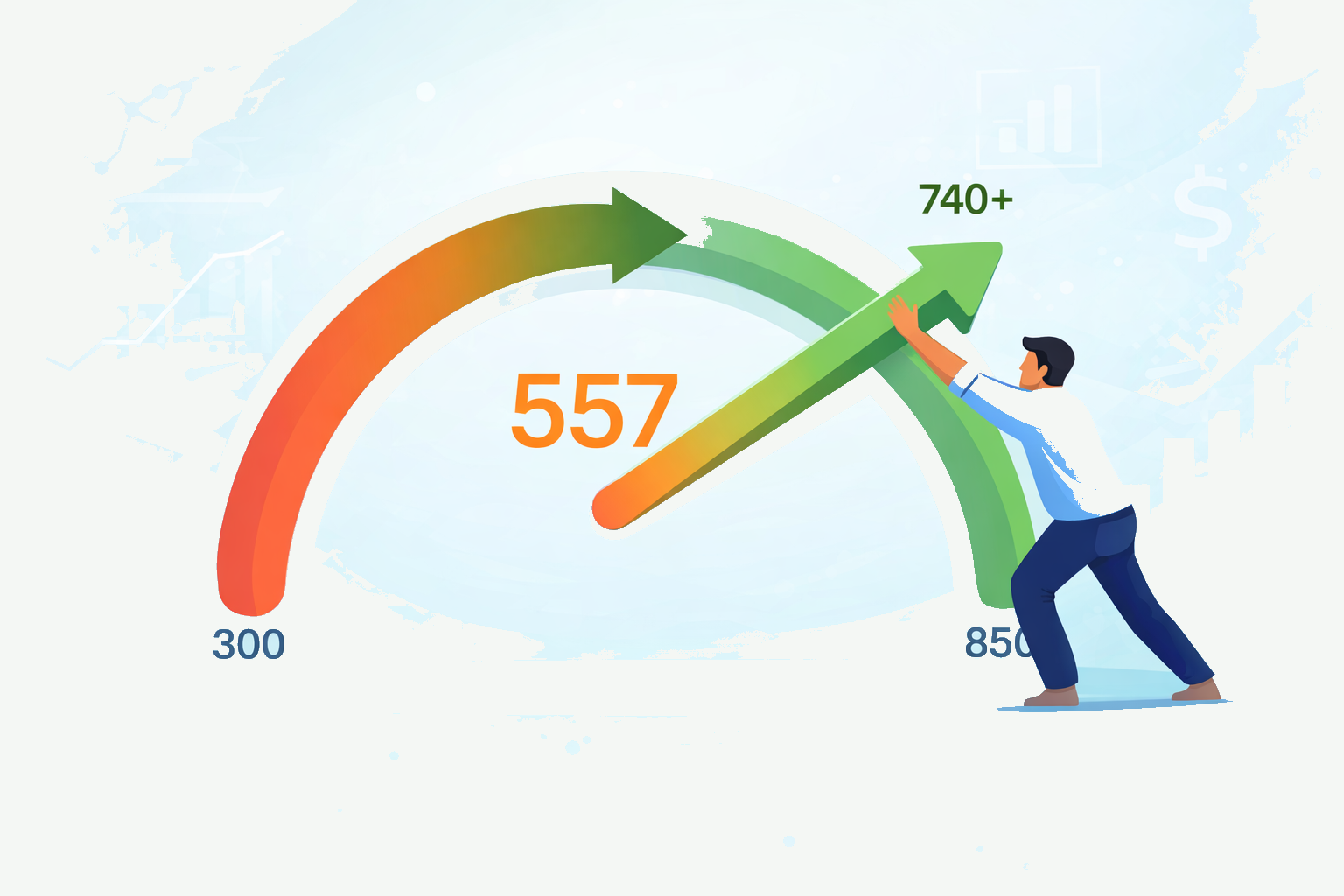
Upload your credit report and our Credit Analyzer identifies exactly what is holding your score back and gives you a step-by-step 90-day plan to reach 740+.
Trusted by 500+ successful placements and excellent reviews on TrustPilot ★★★★★
Analyze My Credit Free →