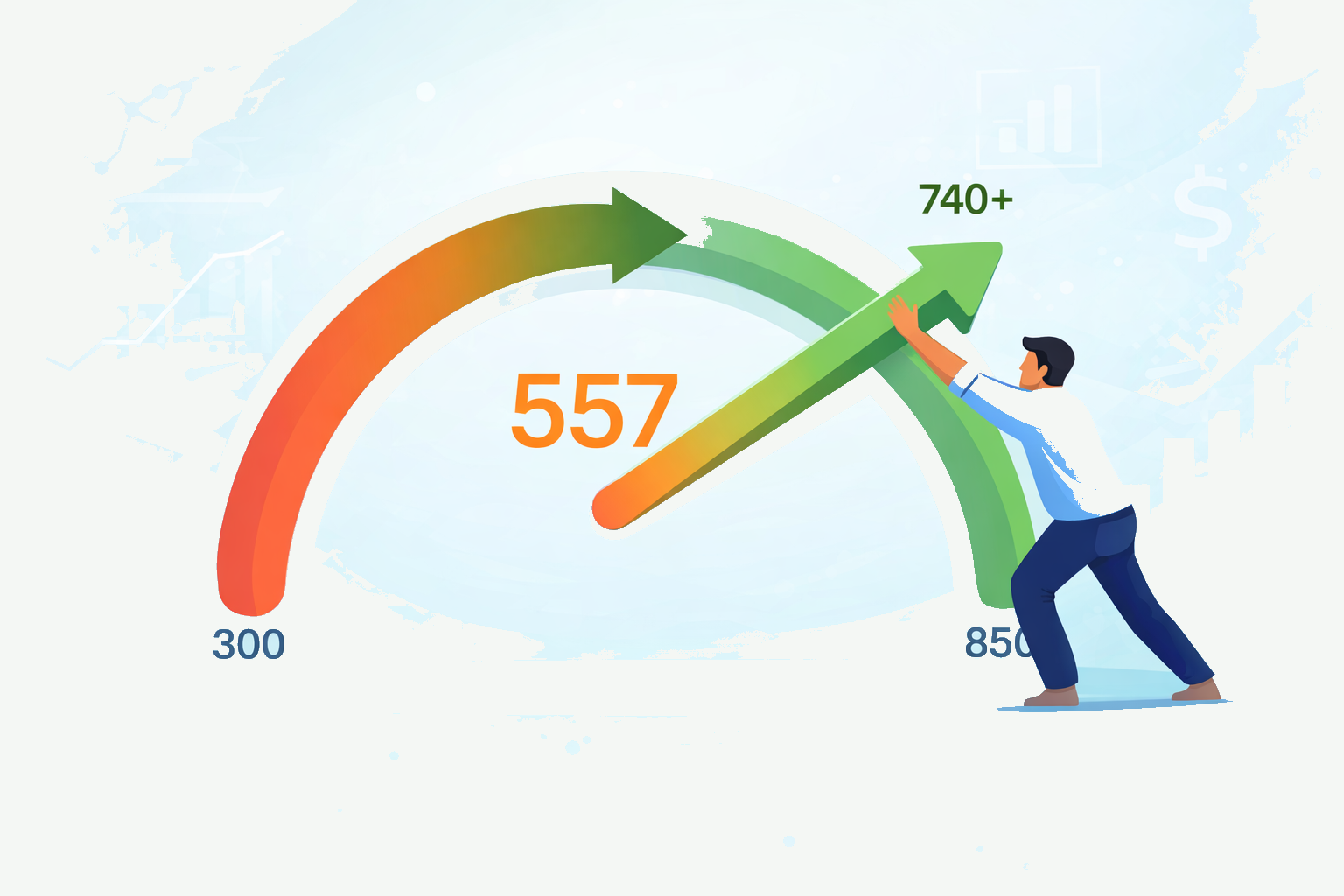
Why credit strategy belongs in the CPA and advisor conversation
Tax season and annual planning meetings are the two moments when clients reveal the most about how they actually use debt, liquidity, and credit. That is exactly why CPAs and financial advisors should talk about credit strategy before a mortgage application, HELOC, refinance, rental move, or other financing event is imminent.
This does not mean becoming a credit repair specialist. It means recognizing the planning moves that can collide with how lenders and scoring models read a file: paying off the only active auto loan, moving heavy business expenses onto personal cards, closing "unused" accounts, or drawing on a HELOC right before underwriting. Good balance-sheet logic and good credit timing are not always the same thing.
That distinction matters because lenders do not underwrite "financial sophistication." They underwrite reported data: balances, active account types, payment history, debt obligations, and current liabilities. A move that improves cash flow, simplifies taxes, or reduces visible debt can still lower a score, tighten underwriting, or change pricing if it lands at the wrong time.
Clients usually split their financial life into separate buckets: taxes, borrowing, investing, and real estate. Credit scoring and mortgage underwriting do not respect those buckets. A recommendation made for tax efficiency or liquidity management can change the exact variables that lenders score or count in qualification.
That is why the issue belongs in professional planning conversations. Credit is not just a "loan officer problem." It becomes a CPA or advisor issue the moment a recommendation changes one of the following:
- revolving utilization,
- active installment history,
- available revolving credit,
- new inquiries or new accounts,
- monthly debt obligations that will show up in underwriting.
FICO itself identifies payment history, amounts owed, length of history, credit mix, and new credit as major scoring categories. In practice, that means a planning move can affect both score and mortgage readiness even if it looks rational on a spreadsheet.
Credit strategy is not only about score — it is also about DTI and underwriting
This is where many otherwise solid articles go fuzzy. A planning move can affect score, debt-to-income ratio, or both.
Examples:
- Paying off the last car loan may improve monthly cash flow and lower DTI, but it can also change the borrower's active installment profile.
- Putting $20,000 of business spend on personal cards may not change DTI much if the minimum payments stay manageable, but it can still crush the score through utilization.
- Opening a HELOC may increase available credit, but once drawn it may add both revolving balance pressure and a new monthly housing-related debt obligation.
That distinction matters because conventional and FHA underwriting do not use a single universal rulebook. For Fannie Mae, manually underwritten loans generally cap total DTI at 36%, with potential expansion to 45% if the borrower meets the Eligibility Matrix requirements, while DU casefiles may permit DTI up to 50%. FHA has long used 31/43 benchmark ratios, with higher ratios possible when compensating factors exist. In other words, CPAs and advisors should recognize these intersections but should not quote approval thresholds as if they are one-size-fits-all. Lender overlays still matter.
Example 1: Paying off the car loan can be good finance and bad timing
Clients often assume paying off an auto loan can only help. From a cash-flow perspective, that can be true. From a credit perspective, the timing can still work against them.
If the auto loan is the client's only active installment tradeline, paying it off may leave the file with no active installment debt at all. That can change the profile the scoring model sees. FICO specifically notes that credit mix counts, and myFICO has also explained that paying off the only active installment loan can cause a score drop because consumers with no active installment loans tend to represent higher risk than those actively repaying one.
The key nuance is that the positive history does not instantly vanish. Closed positive accounts can continue to report for years. The problem is not "history disappeared overnight." The problem is that the active installment profile changed right before financing.
For CPAs and advisors, this is the right question:
"Are you applying for a mortgage, refinance, or HELOC in the next few months?"
If the answer is yes, "pay it off now" should become a lender-timing conversation rather than an automatic instruction.
Example 2: Business expenses on personal cards can quietly wreck a mortgage file
This is one of the most common blind spots with self-employed clients, sole proprietors, and smaller businesses.
The tax logic often sounds fine:
- the client wants rewards points;
- the client wants a simple way to track deductible expenses;
- the client wants to keep business cash invested or available.
But the bureau does not care why the balance is there. If the expense sits on a personal revolving line when the statement cuts, it becomes personal utilization.
A simple example:
- personal card limits: $35,000 total;
- existing balances: $4,900;
- starting utilization: 14%;
- Q1 business spend added: $19,000;
- new total balance: $23,900;
- new utilization: 68%.
That is the kind of move that can suppress a mortgage-sensitive score quickly, even if the business is healthy and the expense is fully legitimate. The client may feel fine financially and still look much riskier to an automated system one statement cycle later.
This is why advisors should ask:
"Are these expenses being reported on personal revolving accounts, and do you plan to apply for financing soon?"
That is the handoff point.
Example 3: Closing dormant credit cards can backfire now and later
Clients often want to "clean things up." Advisors often support that instinct. But closing unused cards is one of the most misunderstood moves in personal finance.
The immediate risk is usually not average age. The immediate risk is lower available credit. If the client carries any balance at all, shutting down old cards can push utilization higher on the accounts that remain open.
There is also a longer-tail age effect. Closed accounts in good standing can remain on the report for years, so average age does not always collapse on day one. But once those accounts eventually fall off the file, age metrics can weaken later.
So the technically accurate way to frame this is:
- closing cards can hurt now by increasing utilization;
- closing old cards can hurt later when they no longer appear in the file;
- "unused" does not mean "irrelevant" when financing is nearby.
That is why a CPA or advisor should not casually recommend closing accounts as a housekeeping move without asking what borrowing is coming next.
Tax season is the natural checkpoint for a credit-aware conversation
Tax season is when clients expose the exact information that makes credit strategy relevant:
- big balances on personal cards;
- debt paydowns funded by refunds, bonuses, or business cash;
- upcoming home purchases, refinances, or rentals;
- plans to simplify accounts or close old lines;
- signs of cash-flow stress that may have pushed balances up.
That makes tax season the best time to ask a very small set of questions:
- Are you planning any major financing or real-estate move in the next three to six months?
- Are you carrying business expenses on personal cards?
- Are you thinking about paying off loans or closing accounts right now?
- Have you looked at all three bureau reports recently?
For the last question, the cleanest consumer-facing source is AnnualCreditReport.com, where clients can review reports from all three major bureaus.
Advisors: HELOCs, margin, real estate, and liquidity planning all touch credit differently
Not every liquidity tool hits a credit file in the same way.
HELOCs
A HELOC is clearly a credit event. The application can trigger a credit review, and the line itself can affect the file differently before and after draws. An undrawn line may expand available revolving capacity; a large draw can create the opposite effect by adding significant revolving balance exposure and potentially a new monthly obligation.
Mortgages and refinances
These are obvious credit events, but the critical planning issue is timing. A client can look mortgage-ready based on income and assets, then hit avoidable pricing or approval problems because utilization spiked, old assumptions about the score were wrong, or a debt move changed the file shortly before underwriting.
Margin and securities-based lending
These do not always affect consumer credit the same way a mortgage or HELOC does. But they still belong in the conversation because they change liquidity strategy, monthly obligations, and sometimes the client's decision to leave other debts open or pay them off.
Real-estate leverage
Investment-property plans, bridge borrowing, HELOC draws for renovations, and similar strategies can all interact with score, DTI, reserves, and lender overlays. Advisors do not need to model the mortgage file themselves. They do need to recognize when the plan is about to intersect with it.
A practical screening table for CPAs and advisors
| Client move or idea | Credit-side risk | Underwriting-side risk | Better handoff question |
|---|---|---|---|
| Pay off the only car loan | Active installment profile changes | DTI may improve, but score can still move | "Any mortgage, refinance, or HELOC application coming soon?" |
| Put business spend on personal cards | Utilization can spike quickly | Mortgage pricing and approvals can worsen | "Will these balances report before financing?" |
| Close dormant credit cards | Available credit drops now; age impact can come later | Score may weaken before application | "Are you borrowing in the next few months?" |
| Open or draw a HELOC | New revolving exposure or inquiry | New liability and overlay issues possible | "When will you apply, and how much do you expect to draw?" |
| Use margin or securities-based borrowing | Credit impact varies by structure | Liquidity and debt planning can still affect mortgage readiness | "Is this replacing other debt, or sitting on top of it?" |
The professional handoff: flag the intersection, do not improvise the fix
This is the cleanest operating rule for CPAs and advisors.
Your role is to spot when a planning decision could alter:
- utilization,
- active tradeline mix,
- DTI,
- timing of a credit pull,
- or mortgage pricing/eligibility.
Your role is not to tell the client:
- exactly which card to close,
- how to dispute accounts,
- whether to open a new tradeline,
- or how to engineer a mortgage score.
The correct language is simple:
"This move may affect your credit profile or your financing timeline. Before you execute it, have your lender or credit professional review the timing."
That keeps the advisor in the right lane while still adding meaningful value.
For a broader lender-side framework, see Credit Strategy for Professionals.
Why this matters for referrals and client trust
The best advisors are often the ones who save clients from mistakes they never saw coming.
When a CPA catches that a refund-funded auto payoff is about to land 30 days before a mortgage application, that is not "extra." That is planning.
When an advisor spots that a client is floating business cash flow on personal cards right before a home search, that is not credit repair. That is risk management.
And when either professional knows enough to pause and hand the issue to the lender before the move is final, the client experiences the advisor as coordinated, careful, and genuinely useful.
Bottom line
Credit strategy belongs in the CPA and advisor conversation whenever a planning recommendation changes how debt is reported, how much revolving credit is used, what active account types remain, or when a financing event will happen.
That does not make the CPA or advisor a credit technician. It makes them alert to the exact moments when tax planning, liquidity planning, and borrowing strategy stop being separate topics.
The value is not in giving technical credit advice. The value is in spotting the collision early enough to involve the right professional.
Get Your Personalized Credit Roadmap
Upload your credit report and our Credit Analyzer identifies what may be holding your score back and provides a step-by-step report-based improvement plan.
Analyze My Credit Free →