A credit report error usually does not start on your credit report. It starts upstream — inside the data file a lender, collector, or servicer sends to the bureaus. If that file carries the wrong account status, the wrong balance, a missing limit, or a bad delinquency date, the bureau can display the wrong tradeline and the score model can react to the wrong input. For consumers trying to clear a mortgage, auto, or rental approval threshold, that can mean the difference between a clean file and an avoidable denial.
That upstream reporting language is usually Metro 2®. In plain English, Metro 2 is the industry-standard format furnishers use to send consumer account data to the credit bureaus. It is maintained through the Consumer Data Industry Association, and it exists so banks, card issuers, auto lenders, debt buyers, and collectors all report credit information in a standardized way instead of inventing their own formats. If you want to understand why a tradeline is wrong — and who is actually in the best position to fix it — you have to understand Metro 2.
For the consumer-facing dispute workflow, the best starting point is the CFPB's guide on how to dispute an error on your credit report. And if you need to isolate which tradeline is actually breaking the file before you dispute it, see /troubleshooting/credit-score-debugging/.
What Metro 2 actually is
Metro 2 is not a credit score. It is not a bureau. It is not a consumer report. It is the standardized reporting format used by furnishers to send consumer credit account information to the major credit reporting agencies.
That distinction matters because a lot of consumers think the bureau is "watching" their account activity directly. It is not. The bureaus only know what a furnisher sends them. If your lender's internal system marks a paid account as still in collections, or maps a revolving line with the wrong limit, that bad input can flow all the way through to your report and your score.
This is also why Metro 2 belongs in a troubleshooting cluster. When a score looks wrong, the useful question is rarely "Why is the bureau doing this to me?" The more useful question is "What data did the furnisher send, and which field is wrong?"
How your data actually reaches the bureaus
At a practical level, the pipeline looks like this:
- The creditor or collector maintains its own internal account records.
- Those internal records are mapped into a Metro 2 reporting file.
- The file is transmitted to one or more bureaus on the furnisher's reporting cycle.
- The bureaus ingest the data and update the consumer's file.
- A lender, tenant screener, insurer, or score model later reads that updated bureau file.
The key operational point is that a bureau tradeline is often a translated output of whatever the furnisher last sent. So if the source account record is wrong, the bureau display can be wrong. If the source record is right but the Metro 2 mapping is wrong, the bureau display can still be wrong. And if the display is wrong, the score can be wrong.
That is why credit-report debugging works best when you think like a systems engineer: source data, transmission format, receiving system, output.
The Metro 2 field families that matter most
The full Metro 2 specification is extensive, but most credit professionals get the biggest return by focusing on a handful of field families that drive scoring and underwriting impact.
| Field family | Why it matters | Common failure you actually see |
|---|---|---|
| Account type | Tells the system what kind of debt this is | Revolving account coded incorrectly, collection type displayed oddly |
| Account status / payment status | Drives whether the account looks current, late, charged off, transferred, or collected | Paid account still shows active derogatory status |
| Current balance | Affects utilization, debt load, and general accuracy | Paid-down account still reports stale or inflated balance |
| Credit limit / high credit | Critical for revolving-utilization math | Missing or wrong limit causes artificial utilization spikes |
| Dates | Opened date, closed date, payment dates, activity dates | Wrong age, wrong closed/open status, wrong account timeline |
| Date of first delinquency | Controls derogatory aging on negative accounts | Negative item appears newer than it should |
In the 550–680 band, these fields matter more than people think. A single missing limit can turn a moderate-utilization card into a maxed-out card in the scoring math. A wrong payment status can make a paid account look actively delinquent. A bad first-delinquency date can make an old derogatory item stay on the report longer than it should.
Account type: the field that shapes interpretation
Account type is foundational because it tells the system what kind of obligation it is looking at. That matters because revolving debt, installment debt, open accounts, mortgages, collections, and lease-related obligations are not interpreted the same way by lenders, screening systems, or score models.
If an account is typed incorrectly, the entire tradeline can be misread. A revolving line can be interpreted differently from an installment line. A collection or charge-off can be categorized inconsistently. A consumer usually does not see the raw Metro 2 code, but they can often see the result: the wrong account category or a tradeline that "looks off" relative to the actual product.
This is one of the reasons direct furnisher disputes are important. The furnisher is the party that owns the internal product mapping.
Account status and payment status: where damage happens fast
This is usually the highest-impact error category.
If an account status says current, the tradeline looks stable. If it says 30, 60, 90, 120, charged off, transferred, or in collection, the same tradeline becomes far more damaging. The same goes for monthly payment history or payment-rating style fields. A single incorrect late mark can change how a lender sees the file and can materially affect score outcomes.
This is where a lot of "but I paid that already" problems live. The consumer is looking at their bank portal and sees the account resolved. The bureau tradeline still shows a derogatory status. That disconnect is often not philosophical — it is a reporting-field problem.
Balance and limit: the utilization math problem
For revolving accounts, utilization math depends on two things: the reported balance and the reported credit limit.
A consumer can be perfectly current and still lose points if the limit is missing, stale, or understated. That is because utilization is balance divided by limit. If the denominator is wrong, the score math is wrong.
This is one of the most common technical tradeline issues in practice:
- balance updates correctly
- limit does not
- utilization looks inflated
- score drops for what appears to be "no reason"
When consumers say, "I paid my cards down but my score barely moved," or "I'm not even close to maxed out, why is the card showing so high-risk," a missing or bad limit is one of the first fields worth checking.
Date of first delinquency: the field that controls the aging clock
For negative accounts, the date of first delinquency is one of the most important dates in the file.
In practical terms, it is the anchor date used to determine how long a derogatory account history can continue to appear on the report. If that date is wrong, the negative can look newer than it really is, remain on the report longer than it should, or create a misleading delinquency timeline.
This is why consumers fighting old collections or charge-offs should care deeply about delinquency dating. The wrong status hurts. The wrong delinquency date can hurt for longer.
The most common Metro 2-linked errors
1) Wrong account type
The product is one thing internally, but it shows up differently on the report. This can affect both human review and machine scoring logic, especially if the account is being interpreted under the wrong debt category.
2) Missing or wrong credit limit
This is one of the most common artificial-score-suppression errors. If the balance updates but the limit is blank, stale, or understated, utilization can appear far worse than reality.
3) Wrong payment status
A paid account may still show as collected, charged off, or otherwise derogatory. Or a current account may show a late-payment status that does not match the actual payment history.
4) Bad balance reporting
The account may have been paid down, settled, transferred, or closed, but the report still shows an old balance or a number that does not match current records.
5) Bad delinquency dating
An old negative account can look refreshed or newer than it really is if the delinquency timeline is wrong.
6) Open / closed timeline problems
A tradeline may still show open after closure, may show the wrong closure timing, or may reflect a misleading activity timeline that changes how the account is interpreted.
How to spot Metro 2-type errors on your own report
You cannot usually see the raw Metro 2 file. But you can still diagnose many Metro 2-type problems by comparing the bureau tradeline with the creditor's own records.
Use this simple audit process:
- Pull your bureau reports.
- Pull the lender's own records: statements, portal screenshots, payoff letters, closure letters, or payment confirmations.
- Compare them line by line.
Focus on:
- account type
- current balance
- credit limit / high credit
- payment status
- opened date
- closed date
- delinquency timeline for negative accounts
A good practical rule is this: if the creditor's own records and the bureau tradeline disagree on a concrete fact, that is usually a much stronger dispute than "my score looks wrong." Scores are outputs. Metro 2 fields are inputs.
Why furnisher-level disputes are often stronger
Consumers usually start by disputing with the bureau. That is reasonable, and you often should notify the bureau too. But when the problem is a technical tradeline field, direct disputes to the furnisher are often stronger for one simple reason:
the furnisher controls the source data.
The furnisher owns:
- the account system
- the payment records
- the product type
- the internal status logic
- the Metro 2 file generation
If the source system is wrong, the bureau cannot fix that permanently on its own. If the source system is right but the Metro 2 mapping is wrong, the furnisher is still the party most capable of fixing the root cause and sending a corrected update.
That is why bureau-only disputes sometimes come back as "verified as reported." The bureau may simply be confirming that the data in its file matches what the furnisher last transmitted. That does not prove the transmission was accurate.
For field-level account errors, the best practice is often:
- dispute with the bureau
- dispute directly with the furnisher
- include documents showing the exact mismatch
For a full walkthrough of the dispute process — including bureau and furnisher paths — see the credit dispute guide.
What the FCRA requires from furnishers
This is where the legal leverage comes from.
Under the FCRA and Regulation V, furnishers do not get to report carelessly. They have obligations to establish and implement reasonable written policies and procedures regarding the accuracy and integrity of the information they furnish. They also generally must investigate direct disputes that fall within covered categories, including disputes about account liability, account type, balance, credit limit, payment status, payment dates, and opened or closed dates.
In practical language, that means the law expects furnishers to:
- report information accurately
- correct inaccurate or incomplete information
- investigate qualifying disputes
- communicate corrections to the bureaus when necessary
That is why Metro 2 issues are not just "technical weirdness." If a furnisher reports inaccurate information and does not correct it after a proper dispute, the problem can move from a credit-report issue into a compliance issue.
Why Metro 2 knowledge matters so much in the 550–680 range
In super-prime files, a small reporting error can be annoying. In the 550–680 range, it can be decisive.
This is the score band where:
- an apartment application gets denied or approved with conditions
- an auto loan shifts from acceptable APR to painful APR
- a mortgage file misses a pricing or approval threshold
- a thin file gets interpreted as fragile instead of stable
When you are this close to the cutoff, a technical reporting error is not just "wrong." It is expensive.
That is why Metro 2 belongs in an authority cluster. It teaches the reader that credit reports are not mystical. They are structured data outputs. And once you know which fields matter, the right dispute becomes much more obvious. Credit strategy professionals who understand Metro 2 field structure can identify root causes faster and build stronger cases for their clients.
Practical troubleshooting checklist
Use this if you suspect a technical reporting problem:
| Question | Why it matters |
|---|---|
| Does the creditor's portal balance match the bureau balance? | Balance mismatches are common and score-relevant |
| Does the credit limit match? | Wrong or missing limits distort utilization |
| Does the tradeline look like the right account type? | Wrong type can affect interpretation |
| Does the payment status match your actual payment history? | Incorrect delinquency coding is high-impact |
| If negative, does the delinquency timeline make sense? | Wrong dates can keep negatives alive too long |
| Have you disputed with the furnisher directly? | The furnisher controls the source data and Metro 2 output |
If you suspect a rapid rescore may be needed after correcting a Metro 2 error, that process works best when the furnisher has already issued the correction and you need the bureau to reflect it on an accelerated timeline.
Get Your Personalized Credit Roadmap
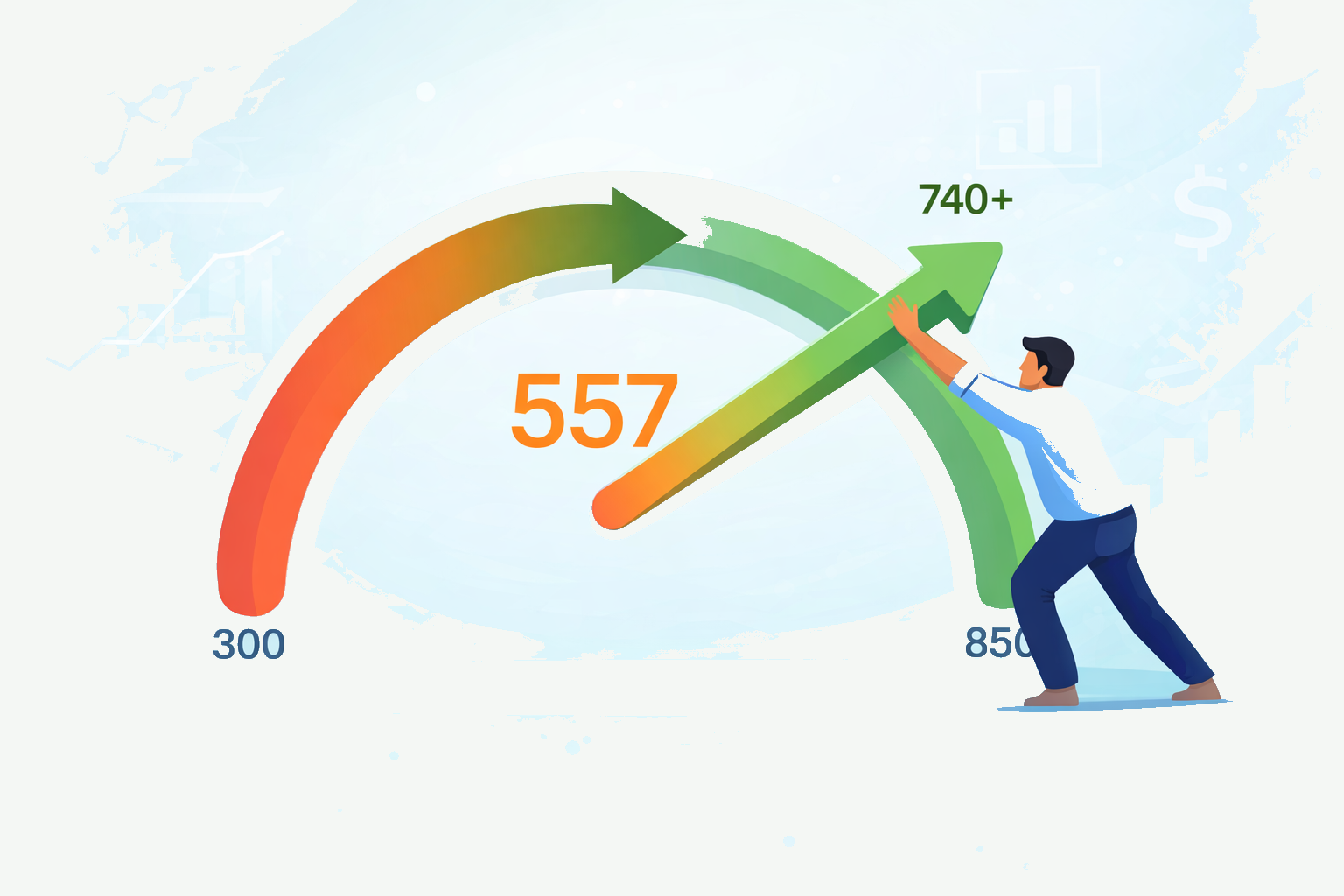
Upload your credit report and our Credit Analyzer identifies exactly what is holding your score back and gives you a step-by-step 90-day plan to reach 740+.
Trusted by 500+ successful placements and excellent reviews on TrustPilot ★★★★★
Analyze My Credit Free →