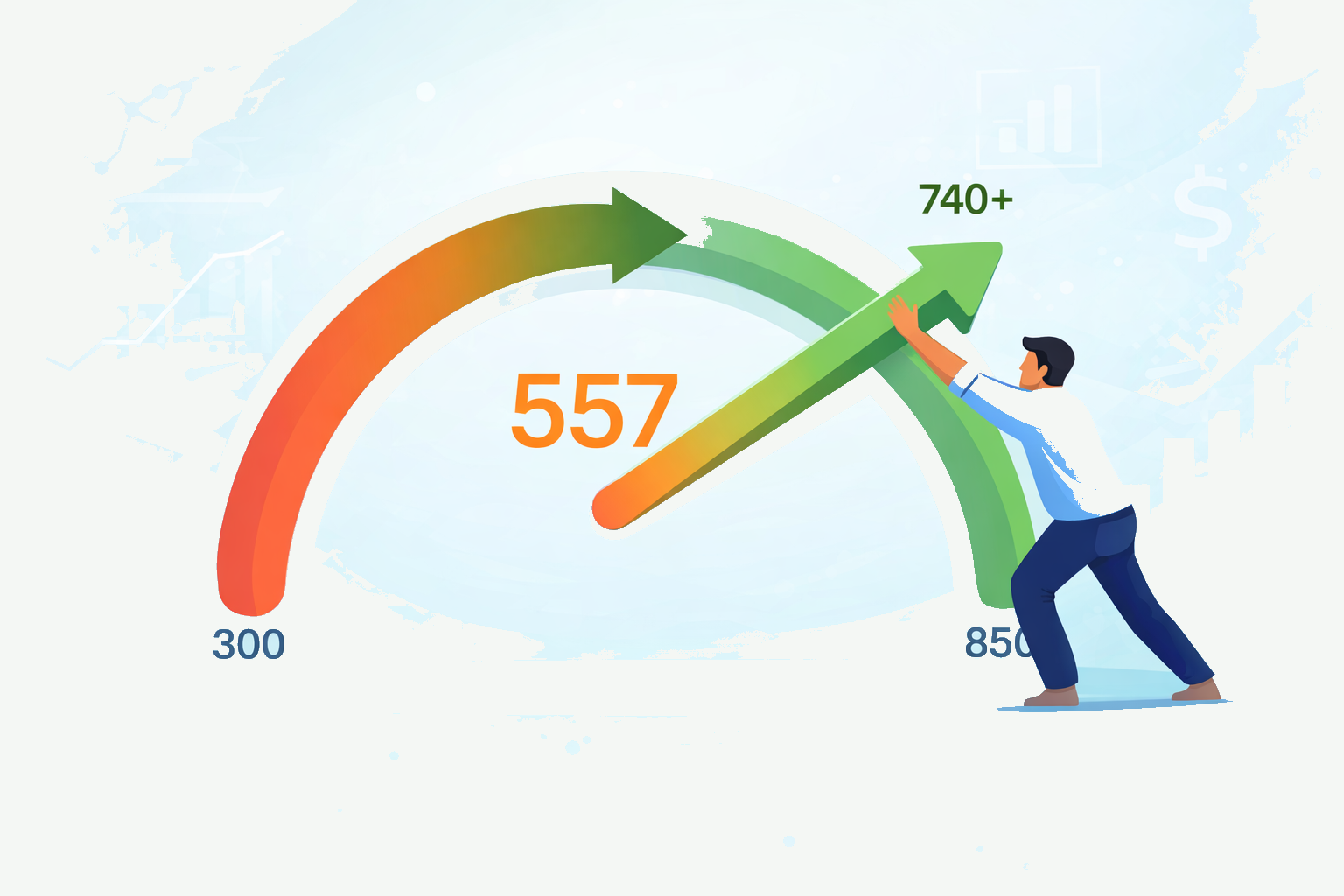

TL;DR: When you apply for credit, lenders don't look at just one score. They may review scores from Experian, Equifax, and TransUnion (and sometimes different scoring models). Authorized user tradelines typically report to all three bureaus and can help by lowering overall utilization, increasing total available credit, and adding positive account history, making your profile look less risky at decision time.
Credit score changes feel confusing because different lenders pull different bureaus, different score versions, and sometimes different decision rules. The good news is that the biggest score drivers are consistent across bureaus: utilization, payment history, age, and overall profile strength. Authorized user tradelines are designed to improve the "today" picture lenders see, especially when utilization and low limits are the main constraints.
Authorized user tradelines typically come from established card issuers such as Chase, Citi, Wells Fargo, American Express, Capital One, and Bank of America. Whether a lender uses one bureau or multiple, improving the core drivers is still the same game.
Why you actually have three credit scores
Many people assume there is one universal score. In reality, you have separate bureau files at Experian, Equifax, and TransUnion. Each bureau can generate scores based on what is in its file, and those files can differ in accounts, balances, reporting dates, or missing items. Understanding the difference between FICO and VantageScore models adds another layer to why your numbers vary across sources.
When you apply for a loan, apartment, or credit card, the lender may pull one bureau, two bureaus, or all three. Some lenders use a middle score, some use the lowest, and some use their own internal risk model. You cannot control which bureau gets pulled, but you can strengthen the same core drivers across all of them.
How authorized user tradelines affect your credit scores
An authorized user tradeline is a credit card account where you are added as an authorized user. When that account reports, it can appear on your credit report as well, depending on issuer and bureau behavior.
When an AU tradeline does report, it can move scores because it increases total available credit, can reduce overall utilization, adds another line of positive payment history, and can add older account age. All of these can improve how your profile looks to automated underwriting.
Why credit utilization matters so much
Utilization is the percentage of available revolving credit you are using. Even if you pay on time, high utilization can drag scores down because it signals higher short-term risk to scoring models. FICO considers utilization a major scoring factor, making it one of the fastest levers for score improvement.
Simple example: if you have a $5,000 limit and a $1,000 balance, utilization is 20%. If you add a $20,000 AU tradeline and nothing else changes, total available credit becomes $25,000 and utilization becomes 4%:
$1,000 / $25,000 = 4%
| Credit Factor | Before AU Tradeline | After AU Tradeline |
|---|---|---|
| Total Credit Limit | $5,000 | $25,000 |
| Current Balance | $1,000 | $1,000 (Unchanged) |
| Utilization Rate | 20% | 4% |
| Risk Profile | Moderate Risk | Low Risk (Stable) |
That shift, without paying down the $1,000, can materially improve the risk snapshot lenders see, especially for people whose scores are mainly constrained by utilization and low limits.
What lenders care about when reviewing your credit
Most underwriting systems are trying to answer one question: do you look risky or stable right now? Lenders often care less about one old mistake and more about your current profile signals: utilization, number of open accounts, recent inquiries, and overall depth of positive history.
AU tradelines do not erase negatives, but they can help your current profile look healthier, especially when your limits are too low for the balances you carry.
Get Your Personalized Credit Roadmap
Upload your credit report and our Credit Analyzer identifies exactly what is holding your score back and gives you a step-by-step 90-day plan to reach 740+.
Trusted by 500+ successful placements and excellent reviews on TrustPilot ★★★★★
Analyze My Credit Free →