The Anatomy of a Collection: Two Entries, One Debt
When an account goes into default, the reporting process typically splits into two distinct entries on your credit file:
Original creditor tradeline. After 120–180 days of non-payment, the original creditor (credit card issuer, medical provider, utility company) charges off the account internally. It remains on your report under the creditor's name, marked as "Charged Off" or "Transferred/Sold," with the balance ideally reported as $0 once the debt is sold.
Collection agency tradeline. The debt gets sold — typically for 4–10 cents on the dollar — or assigned to a third-party collector. That collector opens a brand-new tradeline under their own name, showing the outstanding balance.
Now you have two derogatory entries for the same underlying debt. Each one independently suppresses your score. And here's the Metro 2 compliance point most consumers miss: if the original creditor sold the debt but is still reporting a balance, that is a reporting error worth disputing.
When Disputing a Collection Makes Strategic Sense
The FCRA gives you specific rights to challenge inaccurate or unverifiable information. These are the scenarios where disputes have the highest success rate:
The account isn't yours
Identity theft, mixed credit files (where someone with a similar name or SSN has accounts merged with yours), and simple data-entry errors are more common than most people realize. If you don't recognize the creditor or the balance, dispute it. Under FCRA §611, the bureau must investigate within 30 days and delete anything that can't be verified.
The balance, dates, or account number are factually wrong
Collection agencies buy debt portfolios in bulk and frequently report incorrect balances — sometimes inflated by fees or interest that weren't in the original agreement. Incorrect dates are even more damaging: the date of first delinquency controls when the account falls off your report, and an incorrect DOFD can keep a collection reporting longer than legally allowed.
The debt is past the 7-year reporting window
Under FCRA §605, most negative information must be removed 7 years after the DOFD set by the original creditor. If a collection is older than 7 years and still reporting, you have strong grounds for removal. Dispute with all three bureaus — Equifax, Experian, and TransUnion — citing the specific DOFD and the 7-year limitation.
It's paid but still showing as unpaid
If you've settled or paid a collection in full and the status hasn't updated, dispute the inaccuracy. "Paid" or "Settled" status is materially different from "Open" under newer scoring models — and under current bureau policy, paid medical collections are removed entirely.
Both the charge-off and collection are reporting with balances
If the original creditor is showing a balance and the collection agency is showing a balance for the same debt, that's duplicate reporting. Dispute the original creditor's balance — it should be $0 once the debt was transferred or sold.
The Validation Letter: Your 30-Day Window
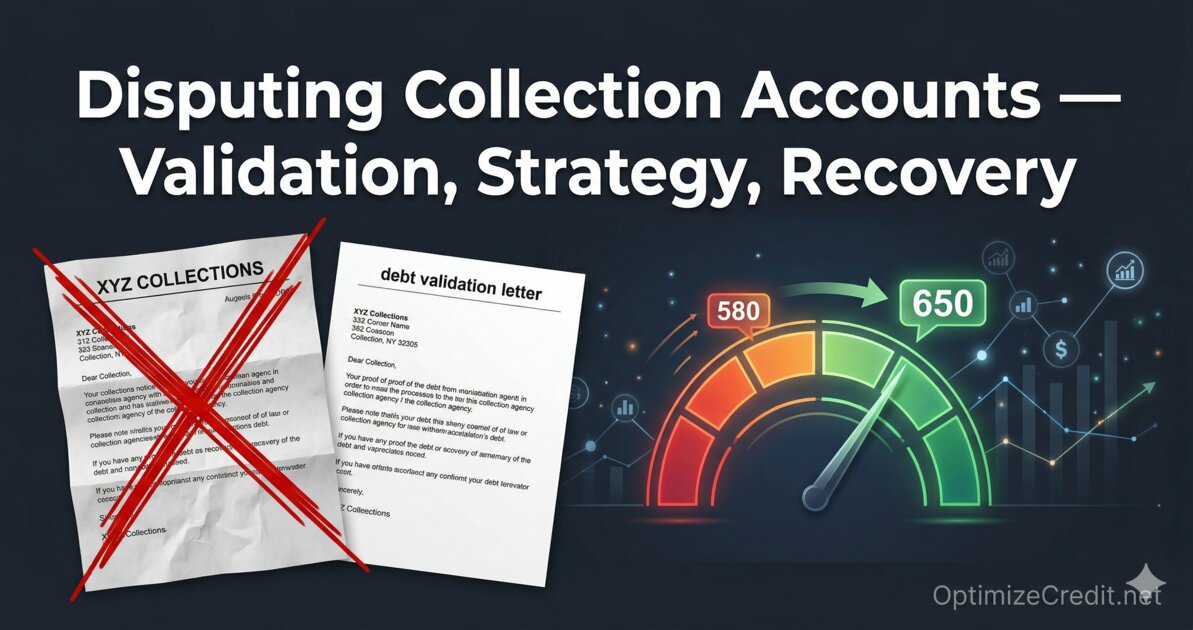
Under FDCPA §809, a collection agency's first written notice triggers a 30-day window for you to request debt validation. This is separate from a bureau dispute and goes directly to the collector.
What the collector must provide upon validation request:
- The amount owed and the name of the original creditor
- Evidence of the original delinquency date
- Documentation that they have legal authority to collect (proof of debt purchase or assignment)
What happens during validation: The collector must cease all collection activity — including credit reporting — until they provide sufficient proof. If they can't produce adequate documentation, they cannot legally continue reporting the tradeline. At that point, file a bureau dispute citing the collector's failure to validate, and include copies of your validation request and any incomplete response.
Important distinction: Validation failure doesn't automatically delete the tradeline from your credit report. It stops the collector and gives you strong ammunition for a bureau dispute, which is the mechanism that actually removes the entry.
Send validation letters via certified mail, return receipt requested. You need proof of when the collector received it. If you're past the 30-day window, you can still request validation, but the collector isn't legally obligated to pause collection efforts while responding.
Many smaller agencies will delete the tradeline rather than invest the time to dig through old paperwork — especially for older, lower-balance debts where the documentation chain has degraded.
Pay-for-Delete: What It Is and When It Works
Pay-for-delete is an informal agreement where you offer to pay or settle a collection in exchange for the collector removing the tradeline from your credit reports. It's not codified in law, and the bureaus officially discourage it — but it happens.
Large national collectors almost never agree. Portfolio Recovery Associates, Midland Credit Management, LVNV Funding, and Encore Capital have compliance policies that prohibit deletion upon payment. They'll update the status to "Paid" or "Settled," but the tradeline remains.
Smaller, regional agencies are more negotiable. If you're dealing with a local medical billing company or a small-balance collector, a pay-for-delete offer has a reasonable chance — especially for balances under $1,000 on accounts several years old. Some will accept 30–50% settlement with a deletion clause.
Get it in writing before you pay. A verbal agreement has no enforcement mechanism. Certified mail or email confirmation from someone with authority at the agency.
How Scoring Models Treat Paid Collections
This is where the math diverges significantly, and getting it wrong can cost you time and money:
| Scoring Model | Paid Collection Impact | Where It's Used |
|---|---|---|
| FICO 8 | Paid = same as unpaid. Binary derogatory flag persists. No score improvement from payment alone. | Most credit cards, auto loans, general lending |
| FICO 9 | Paid collections ignored entirely ($0 balance excluded) | Some personal loans, credit cards |
| FICO 10 / 10 T | Paid collections ignored; 10 T also weighs 24-month payment trajectory | Increasing mortgage lender adoption |
| VantageScore 3.0 / 4.0 | Paid collections excluded; also ignores all collections < 6 months old | Credit monitoring apps, some lenders |
Key correction: Under FICO 8, paying a collection does not produce a 20–40 point boost as some sources claim. The derogatory flag is binary — the score impact is the same whether the balance is $5,000 or $0. The one exception: FICO 8 excludes collection accounts where the original balance was under approximately $100, treating them as nuisance debts.
Bottom line: Before you pay a collection, find out which scoring model your target lender uses. If they pull FICO 8, payment without deletion accomplishes nothing for your score. If they use FICO 9 or VantageScore, payment alone can help.
Medical Debt: Special Rules That Changed Everything
Medical collections now receive fundamentally different treatment than other consumer debt:
Paid medical collections are removed. All three bureaus remove medical debt from credit reports once paid, regardless of how long it was in collections.
Medical debt under $500 is not reported. As of 2023, medical collections under $500 are excluded entirely — eliminating a huge number of co-pays, lab fees, and ER balance bills from credit impact.
One-year grace period. New medical debts don't appear on credit reports until at least 365 days after the original billing date, giving consumers time to resolve insurance disputes and payment plans.
For medical debt specifically, paying the balance is often sufficient — no deletion negotiation needed. The Consumer Financial Protection Bureau provides additional guidance on medical debt protections.
When NOT to Dispute
Within 60–90 days of a mortgage application
When a bureau is actively investigating a dispute, your file gets flagged with a "consumer disputes" notation. Fannie Mae's Desktop Underwriter and Freddie Mac's Loan Product Advisor may reject or delay applications with open disputes on file.
If you have collections that need addressing before a mortgage, work with your loan officer on a direct payoff and rapid rescore rather than filing bureau disputes. For a full pre-application strategy, see our guide on Credit Score Debugging.
The collection is 6+ years old and about to fall off
A collection 6.5+ years old will drop off your report within months. Disputing it risks the collector responding to the investigation, confirming the debt, and refreshing the "date reported" field — making the account look more recent to anyone reviewing your report. The DOFD can't legally change, but an updated reporting date can create confusion. Let it age off naturally.
The information is completely accurate
If the collection is legitimately yours, the balance is correct, the dates are right, and the collector can verify everything, your dispute will come back "verified" with no change. You've accomplished nothing except creating a record of an unsuccessful challenge.
Strategic Order: Prioritize by Impact
If you have multiple collections, don't dispute them all simultaneously. Bureaus can dismiss bulk disputes as "frivolous" under FCRA §611(a)(3). Prioritize methodically:
Most recent first. FICO scoring models weight recency heavily. A collection from 8 months ago suppresses your score far more than one from 5 years ago. The recency penalty decays over time — removing a newer collection produces the largest score lift.
Highest balance second. Among collections of similar age, higher balances carry more weight. This also matters for debt-to-income calculations if you're applying for a mortgage — even if the score impact is similar, an open collection balance affects DTI.
Duplicates third. If the same debt appears as both a charge-off and a collection tradeline, dispute the collection agency entry first — collectors frequently have thinner documentation than original creditors.
Work through collections one or two at a time, allowing 30–45 days between dispute rounds for investigations to complete and scores to update. After each deletion, pull fresh reports — bureaus occasionally re-insert deleted items, which you can challenge under FCRA §611.
Realistic timeline: Validation response takes 10–30 days. Bureau investigations take 30–45 days. Score updates appear in the next reporting cycle after deletion. Total timeline from first dispute to score impact: 60–120 days.
For more on how to structure and file disputes effectively, see the Credit Dispute Guide. And for a broader walkthrough of diagnosing what is actually suppressing your score, visit the Troubleshooting hub.
Get Your Personalized Credit Roadmap
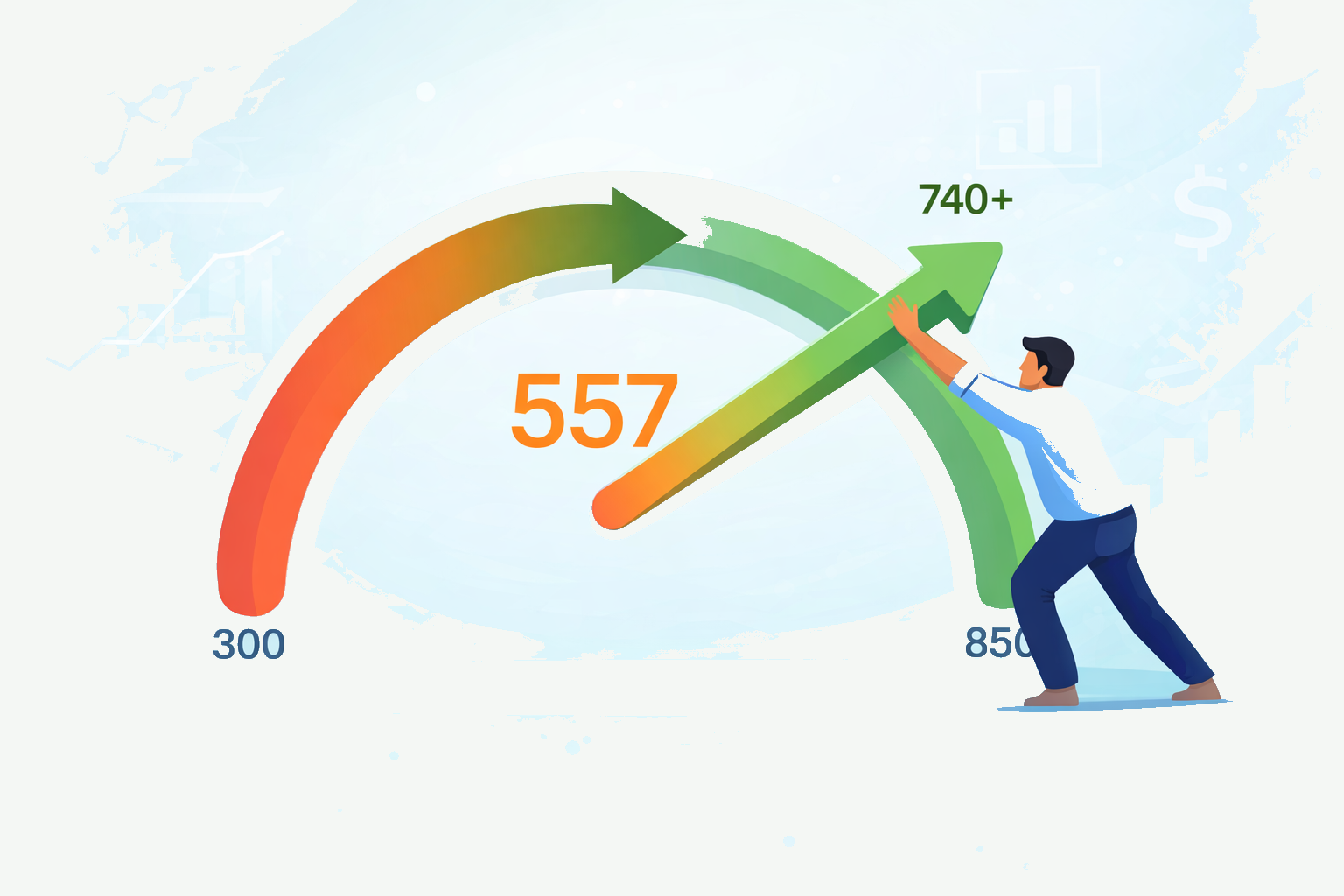
Upload your credit report and our Credit Analyzer identifies exactly what is holding your score back and gives you a step-by-step 90-day plan to reach 740+.
Trusted by 500+ successful placements and excellent reviews on TrustPilot ★★★★★
Analyze My Credit Free →