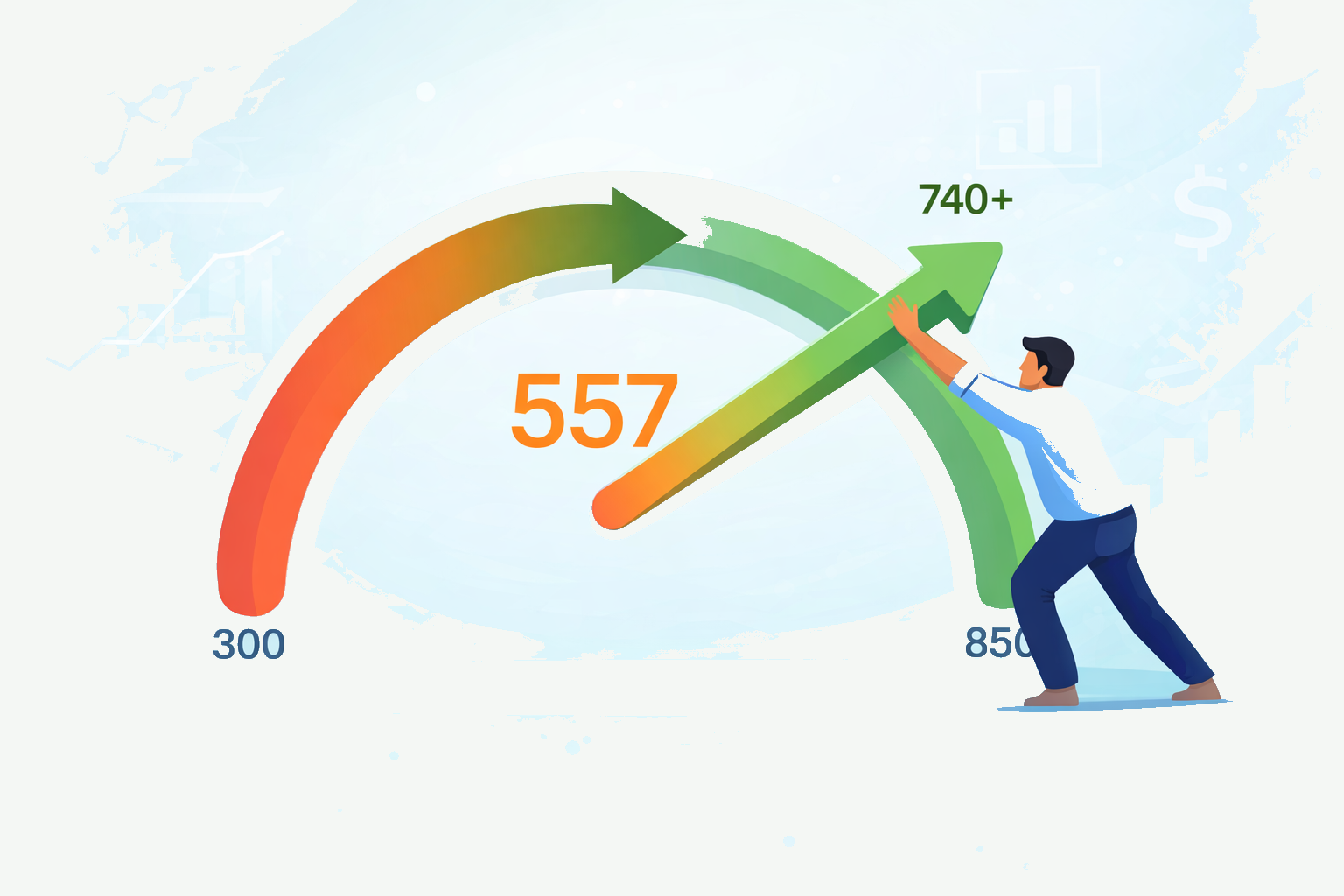
If you are self-employed, 1099, a freelancer, or a small business owner, your biggest mortgage hurdle is the gap between your real cash flow and your documented tax income. Lenders do not qualify you on lifestyle or deposits; they qualify you on documented, stable, and likely-to-continue qualifying income. The fix is to plan taxes, documentation, and credit utilization 12 to 24 months before you apply. This strategy aligns with the broader Master Credit Recovery Roadmap for managing financial transitions.
The Self-Employed TL;DR
- ›Underwriters count net documented income, not gross deposits.
- ›Aggressive tax deductions reduce your qualifying borrowing power.
- ›Business spend on personal cards suppresses FICO scores through utilization.
- ›Plan 12 to 24 months out to align your CPA and Loan Officer.
Manual Underwriting: Why Self-Employed Borrowers Look Weaker on Paper
The mortgage system was built for W-2 wage earners. For business owners, the file must be reconstructed using Fannie Mae B3-3.5 standards. Underwriters look for five main 'drag factors' that shrink your qualifying number:
- Heavy Deductions: Schedule C write-offs reduce the profit used for DTI.
- Declining Trends: A drop in income year-over-year requires conservative smoothing.
- Personal-Card Spend: Business charges inflate personal utilization. See utilization math.
- Thin Documentation: Missing P&Ls or balance sheets push you to pricier programs.
Secondary Market Documentation Standards
| Structure | Personal returns | Business returns | Other Requirements |
|---|---|---|---|
| Sole Prop / 1099 | 2 years 1040 | None | YTD P&L, 4506-C |
| S-Corp | 2 years 1040 | 2 years 1120S | W-2s + K-1s |
| Partnership | 2 years 1040 | 2 years 1065 | K-1 Ordinary Income |
The 12 to 24 Month Strategy
Self-employed mortgage success is a planning story, not a paperwork story.
Year 1: Foundation
- • Separate business/personal accounts
- • Migrate spend to business-only cards
- • Baseline with recovery timelines
Year 2: Execution
- • Model deductions vs. DTI needs
- • File clean returns on time
- • Season cash reserves (3-6 months)
Non-QM and Bank Statement Alternatives
If tax returns understate your cash flow, 'Bank Statement Loans' calculate income from 12–24 months of deposits. These are lender-specific and typically price 1%–3% higher than conventional rates. Use these as a bridge if your mortgage pre-approval fails on traditional DTI math.
Final Checklist Before Application
- 1. Pull all three reports; resolve errors early.
- 2. Target under 10% utilization per personal card.
- 3. Refrain from new business loans or large card swipes.
- 4. Refresh your YTD P&L and Balance Sheet monthly.
- 5. Baseline your file via the Credit Optimizer.
Related life-transition guides
- How to buy a home with five-figure student debt.
- How to separate personal and business credit as an entrepreneur.
Browse the full Life Transition library for adjacent guides, including credit recovery timelines.
Get Your Personalized Credit Roadmap
Upload your credit report and our Credit Analyzer identifies what may be holding your score back and provides a step-by-step report-based improvement plan.
Analyze My Credit Free →