Why the U.S. Credit System Starts You at Zero
Immigrant Credit: The TL;DR
- ›Foreign credit history does not transfer to U.S. bureaus.
- ›Use an ITIN if you do not yet have a Social Security number.
- ›Open a secured card and a credit-builder loan in month 1.
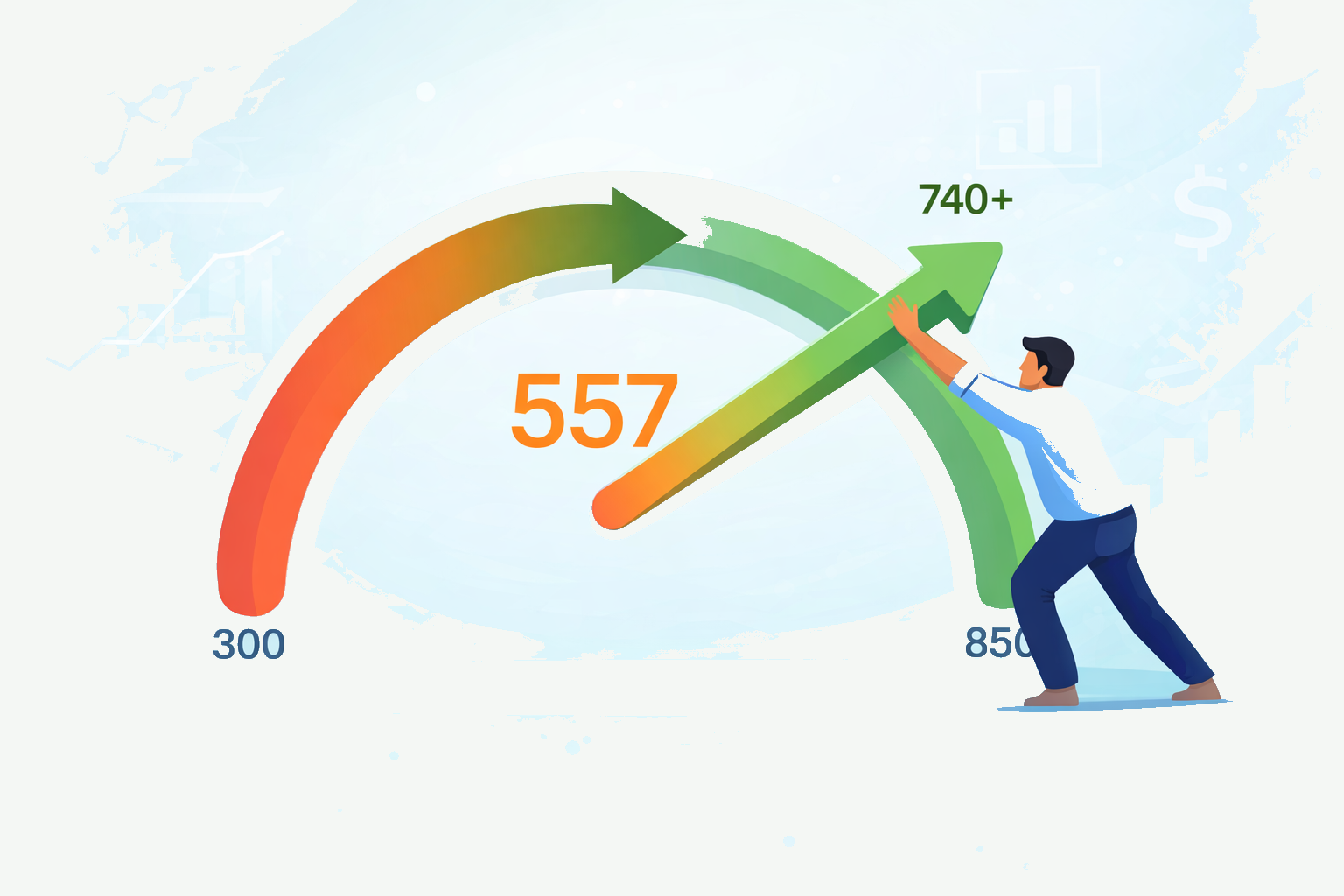
- ›Maintain < 9% utilization to maximize score generation.
You could have a flawless, decades-long payment history and a top-tier credit score in your home country. None of it crosses the border. The U.S. credit system runs on algorithmic trust — lenders don't evaluate your character, they evaluate your domestic data. If you have no domestic data, you're not classified as risky. You're classified as unknown, and in automated underwriting, unknown gets denied.
Why Your Home-Country Credit History Does Not Transfer
The foundation of U.S. consumer credit rests on three private Consumer Reporting Agencies (CRAs): Equifax, Experian, and TransUnion. These entities aggregate financial behavior furnished to them by domestic lenders using a standardized data format called Metro 2.
The structural issue is data siloing. Even if you had an excellent profile with Experian UK or Equifax Canada, that data does not synchronize with their U.S. counterparts. FICO scoring models — used by 90% of top U.S. lenders — are programmed to calculate risk based solely on data reported to the domestic U.S. bureaus.
A few programs attempt to bridge this gap. Experian's World Credit initiative and Nova Credit's Credit Passport can translate some foreign credit data for specific lenders. But coverage is limited to a handful of countries and participating institutions. For most immigrants, the practical starting point is a blank file.
This blank file creates what the industry calls a "thin file" — fewer than five tradelines or less than six months of history. FICO requires at least one account open for six months and at least one account reported within the last six months. Until you meet both conditions, you're unscorable. Not low-scored — literally without a score. For a deeper look at why thin files cause so many downstream problems, see our guide on the thin file problem.
ITIN vs. SSN: You Don't Need a Social Security Number to Build Credit
One of the most persistent myths in immigrant financial circles is that you need a Social Security Number to open credit accounts. From a database architecture standpoint, this is false.
When a bank furnishes your data via the Metro 2 format, the bureau's matching algorithm uses several identifiers to construct your file: full legal name, date of birth, current and previous addresses. An SSN acts as a highly efficient primary key for matching, but when the SSN field is blank, the algorithm relies on the combination of other identifiers to locate or create your file.
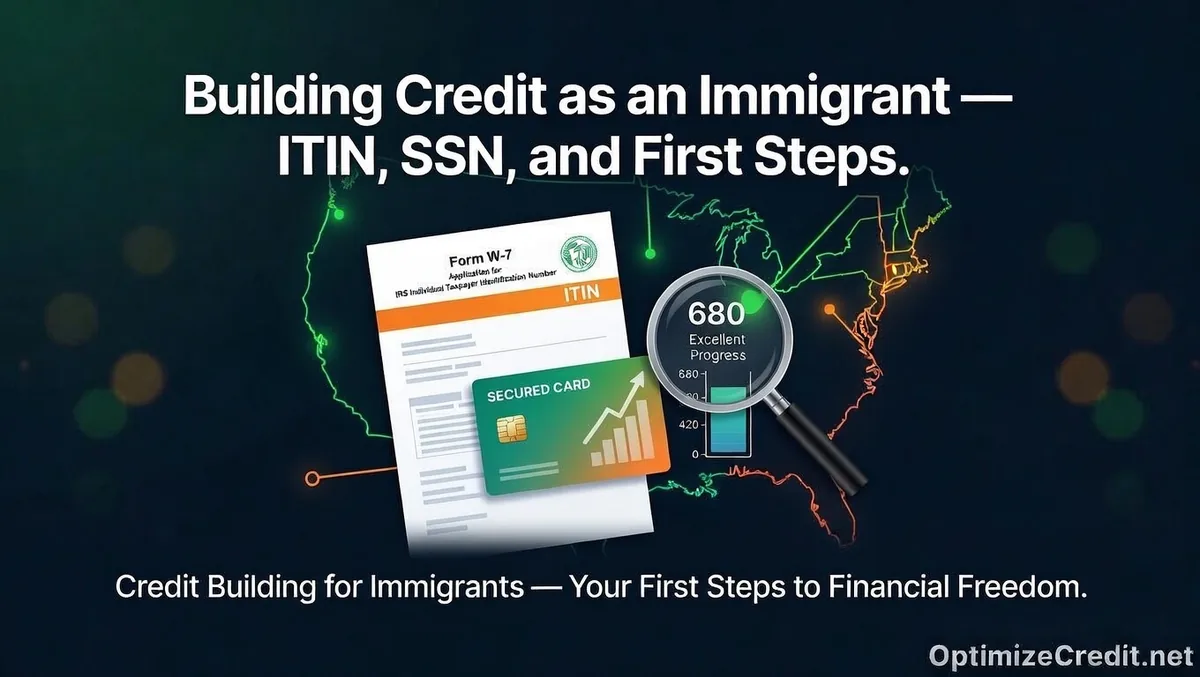
For immigrants who don't qualify for an SSN, the IRS issues an Individual Taxpayer Identification Number (ITIN) — a nine-digit number formatted identically to an SSN. The three major bureaus all accept ITIN-linked accounts, and your credit file builds identically regardless of which number is attached.
Where ITINs work for credit building: Several major issuers — including Capital One, Bank of America, American Express, and Citi — have underwriting systems designed to accept ITINs. Many credit unions and Community Development Financial Institutions (CDFIs) specifically serve ITIN holders with secured cards and credit-builder loans. You can also be added as an authorized user on many major bank cards using an ITIN.
Where ITINs face limitations: Some national banks and most fintech lenders still require an SSN. Pre-approval tools like Credit Karma also require an SSN, which means ITIN holders may need to check their scores through other channels (Experian's free tier, or bank-provided FICO scores).
If you have an SSN, use it. If you only have an ITIN, you can still execute every step in this guide — you just need ITIN-friendly institutions.
The Structural Disadvantage: Why Immigrants Build Credit Slower
Before diving into the step-by-step plan, it's worth understanding why native-born Americans have a built-in head start. Most young U.S. citizens bypass the "zero-data" phase through piggybacking. Parents add their children as authorized users on longstanding credit cards. Under the Equal Credit Opportunity Act (ECOA) and standard bureau reporting practices, the primary account holder's entire payment history, credit limit, and account age are duplicated onto the child's credit report. A teenager can enter the credit market with a decade of inherited history before they've ever made a payment themselves.
Immigrants almost universally lack this domestic family network. You're forced to build file depth organically, which is mathematically slower. Overcoming this gap requires either finding a trusted U.S.-based person to add you as an AU, or using authorized user tradeline services — which we'll cover in Step 3.
The Three-Step Credit Building Sequence
Order matters. Each step builds on the previous one, and the timing between them determines whether you hit 680 in six months or eighteen months.
Step 1: Open a Secured Credit Card (Month 1)
A secured card requires a refundable cash deposit that becomes your credit limit — $200 to $500 is typical. The bank holds your cash as collateral, which lets them bypass the standard credit check. The card reports to the bureaus exactly like an unsecured card — there's no indicator that it's secured. This is your foundational tradeline. It starts the clock on your credit history age and begins generating payment history, which accounts for 35% of your FICO score.
The utilization mechanics matter here. The "Amounts Owed" factor is 30% of your total FICO score, and it's calculated by dividing your reported balance by your credit limit. The balance that matters isn't the one on your payment due date — it's the balance on your statement closing date. That's the number the issuer reports to the bureaus.
On a $500 limit card, keep your statement closing balance under $45. Staying below roughly 9% utilization keeps you in the optimal scoring range. Pay the remaining balance in full before the due date to avoid interest charges.
What to avoid in a secured card: Cards with annual fees above $50 are predatory products targeting people with no alternatives. Skip any card that charges a "processing fee" or "program fee" before approval. And avoid store credit cards marketed as "easy approval" — they typically carry 28%+ APRs and hurt your profile in ways we'll cover below.
Step 2: Add a Credit-Builder Loan (Months 2–3)
A credit-builder loan works in reverse: the lender locks the loan amount (typically $500 to $1,000) in a secured account while you make fixed monthly payments over 12 to 24 months. Each payment is furnished to the bureaus as an on-time installment payment. After the term ends, you receive the funds.
Why this matters: FICO's credit mix factor (10% of your score) explicitly rewards having both revolving accounts (credit cards) and installment accounts (loans). Adding an installment tradeline to a file that only has revolving debt typically produces a 10- to 25-point bump once a few months of payment history accumulate.
Solid credit-builder options: Self (formerly Self Lender) offers plans from $25 to $150/month and reports to all three bureaus. Many credit unions offer credit-builder loans with low minimums. Lending Circles through Mission Asset Fund are specifically designed for immigrants and charge zero interest.
After six months of concurrent on-time payments on both your secured card and credit-builder loan, you'll typically have a scorable file in the 630 to 660 range.
Step 3: Add an Authorized User Tradeline (Months 3–6)
This is the step that closes the gap between organic building and the inherited history that native-born Americans get for free. When you're added as an authorized user on a seasoned credit card — say, a card opened in 2017 with a $20,000 limit and 100% on-time payment history — that account's entire data string maps to your credit file, typically within one billing cycle.
The impact on a thin file is threefold. It dramatically increases your average age of accounts. It injects substantial aggregate credit limits into your profile, instantly diluting your overall utilization ratio. And it transforms a fragile two-tradeline file into a more robust, multi-account profile that scoring models treat with higher confidence.
Two paths to getting an AU tradeline:
Option A — A trusted person. A spouse, employer, mentor, or close friend with a well-aged U.S. credit card (ideally 5+ years old, perfect payment history, low utilization) can add you. You don't need to use or possess the card. The history reports to your file regardless.
Option B — Authorized user tradeline services. These are legitimate services where you're added as an AU on a seasoned account specifically to benefit your credit profile.
The FICO impact on a thin file can be substantial — going from one or two young tradelines to also having a 7+ year account with a high limit can push a score from the low 600s into the 680 to 720 range.
Realistic Timeline: Thin File to 680+
| Timeframe | What's Happening | Expected Score Range |
|---|---|---|
| Month 1 | Open secured card, apply for credit-builder loan | No score — FICO needs 6 months of history |
| Months 2–3 | Two accounts reporting on-time payments; consider adding AU tradeline | Still may be unscorable |
| Months 4–5 | FICO score generates | 580–640 (without AU) · 640–700+ (with AU) |
| Months 6–8 | Payment history depth accumulates | 650–680 (without AU) · 680–720 (with AU) |
| Months 9–12 | Apply for unsecured card; secured card may graduate | 680–740 with consistent management |
This timeline assumes zero negative items. A single 30-day late payment on a thin file can drop your score 60 to 100 points — the thinner your file, the more each data point weighs.
Pitfalls That Specifically Target Immigrants
Predatory Credit Repair and CPN Scams
A significant number of credit repair operations target immigrant communities with multilingual marketing promising fast credit scores for $500 to $2,000 upfront. Many do nothing more than send template dispute letters — something you can do yourself for free under the Fair Credit Reporting Act. The worst offenders sell CPNs (Credit Privacy Numbers), which are frequently stolen Social Security Numbers. Using a CPN to apply for credit is a federal crime, and the consumer — not the company that sold it — bears the legal liability. If someone offers to "create a new credit file" for you, walk away.
If you encounter genuinely inaccurate items on your credit report, you have the right to dispute them directly with the bureaus at no cost. The Consumer Financial Protection Bureau's guide to credit disputes is the authoritative resource.
Bad Store Credit Cards
Retailers targeting thin-file consumers push store cards with approval-friendly underwriting but terrible terms: 25 to 30% APRs, low limits ($300 to $500), and deferred interest promotions that retroactively charge interest on the full purchase price if you don't pay in full by the promotional deadline.
These cards also damage your profile mechanically. A $300 store card with a $150 balance reports 50% utilization on that single card. FICO evaluates utilization both in aggregate across all cards and on a per-card basis. One high-utilization card drags your score even if your overall utilization is low.
For a step-by-step approach to building credit when you have nothing on file, see our building credit from zero guide. You can also explore more foundational topics in the credit basics hub.
Related life-transition guides
Get Your Personalized Credit Roadmap
Upload your credit report and our Credit Analyzer identifies what may be holding your score back and provides a step-by-step report-based improvement plan.
Analyze My Credit Free →