If you are researching tradelines for credit repair, you are probably trying to solve one of two very different problems.
The first problem is damage: collections, late payments, charge-offs, bankruptcy fallout, identity mistakes, or balances that are too high. The second problem is weakness: not enough age, not enough revolving depth, or a file that looks too thin to score well.
Tradelines and credit repair are not the same thing because they do not fix the same issue.
Credit repair is about removing or correcting bad data. Tradelines are about adding positive data. That is why the best results usually come from using them in the right order, not from choosing one and ignoring the other.
The biggest mistake people make is buying a tradeline too early. If your report still has major errors, high utilization, or fresh derogatory marks, the tradeline may help much less than you expect. In many cases, the right answer is not "tradelines vs credit repair." It is credit repair first, tradelines second, primary credit-building third.
Tradelines vs credit repair: what each one actually fixes
| Feature | Credit Repair | Tradelines |
|---|---|---|
| Main purpose | Remove or correct inaccurate negative information | Add positive account history |
| What it helps most | Reporting errors, duplicate collections, outdated derogatories, identity mix-ups | Thin files, short history, weak revolving depth, temporary score support |
| What it does not do | It does not create positive age or limit out of nowhere | It does not erase collections, charge-offs, bankruptcies, or wrong data |
| Typical timeline | 1 to 6 months | Can post in as little as 15 days, often longer depending on statement cycle |
| Typical cost | Varies widely | Roughly $200 to $2,000+ per tradeline |
| Best use case | Dirty report that needs cleanup | Cleaner report that still needs more strength |
That table explains why so many people get disappointed. If your score problem is mostly in payment history or utilization, tradelines alone may underperform. If your score problem is mostly thin credit, tradelines may work much better.
That matches the structure of FICO itself. Payment history is roughly 35%, amounts owed and utilization about 30%, and length of credit history about 15%. Tradelines can help some of the utilization and age side, but they do not directly fix the largest damage categories. For a full breakdown, see The 5 Factors That Make Up Your FICO Score.
The correct order of operations
This is the biggest gap in most competitor articles. If your goal is the highest return on money and effort, the usual order is:
- Pull all three reports and audit them for errors. Look for duplicate collections, wrong late payments, incorrect balances, identity-mixed accounts, and outdated derogatories.
- Dispute inaccuracies first. If something is wrong, fix that before paying to add positive data on top of a broken report.
- Pay down revolving utilization. If your cards are near maxed, lowering balances often produces a stronger and more durable gain than renting positive history.
- Stabilize your payment behavior. A fresh late payment can wipe out much of the value of a tradeline strategy.
- Then consider tradelines. If your file is still thin, short, or weak on revolving depth, tradelines may help more now than they would have at the beginning.
- Use the boost window to build your own primary credit. Tradelines are often temporary. Your long-term goal should always be primary accounts in your own name.
That is the highest-odds path for most people.
Decision tree: should I use tradelines?
Use this as a fast filter.
Do you have errors on your report?
- Yes — Start with disputes and corrections.
- No — Go to the next question.
Do you have high utilization on your own cards?
- Yes — Paying down debt usually comes before buying tradelines.
- No — Go to the next question.
Do you have a thin or short file?
- Yes — You are more likely to benefit from tradelines.
- No — Go to the next question.
Do you have recent severe negatives or a fresh bankruptcy?
- Yes — Tradelines may have limited effect. Rebuilding primary credit usually matters more first.
- No — Tradelines may be worth considering as a targeted boost.
Are you choosing between paying down debt and buying a tradeline?
- Yes — In many cases, debt paydown wins.
- No — Tradelines may be a reasonable optimization tool.
This is the honest answer behind the question "do tradelines help bad credit." Sometimes yes. Often yes later, not first.
Has anyone used a tradeline? Real results
Yes, tradelines can work. But they do not work equally well for everyone.
The people who usually see the strongest results are:
- consumers with very thin files
- people with short credit histories
- people who do not have major active derogatory suppression
- people whose utilization is already controlled
The people who often see weaker results are:
- consumers with fresh late payments
- heavily maxed-out profiles
- post-bankruptcy files
- people expecting tradelines to override major negative history
A practical score-impact range for many real buyers is about 20 to 100 points, depending on the file. The key is profile fit.
Do tradelines help if you have bad credit?
Most of the time, repair first.
If your bad credit is mainly caused by inaccurate negatives, high utilization, collections, fresh late payments, charge-offs, or bankruptcy damage, then tradelines usually should not be your first move.
Tradelines help more when your file is weak than when it is actively damaged. They add positive data, but they do not remove the negative data that is already suppressing the file.
A good way to think about it:
- Credit repair stops the bleeding.
- Debt payoff improves the health of the file.
- Tradelines can then make a cleaner file look stronger.
That sequence usually gives the best return. If you are dealing with errors or disputes, start with our guide to working with credit repair.
Authorized users vs purchased tradelines
Mechanically, both are authorized-user reporting. The difference is context and intent.
Organic authorized user
This is when a parent, spouse, or trusted family member adds you to a card. It is usually free, and it may stay on your report indefinitely as long as you remain on the account.
Purchased tradeline
This is when you pay to be added temporarily to someone else's card for reporting benefit. The account is real, but the arrangement is commercial and usually time-limited.
From the bureau's perspective, both can show as authorized-user accounts. But from a practical scoring and underwriting perspective, newer scoring models appear to be more cautious about how much weight they give authorized-user data, especially compared with your own primary accounts. For a deeper look at how AU accounts affect your score, see the AU tradeline effect guide.
How much will a tradeline boost my credit score?
The honest answer is: it depends heavily on your starting profile.
A reasonable framework:
- Thin or short file: often the best candidate, sometimes meaningful gains
- Fair file with moderate utilization: possible moderate gains
- Established good-credit file: often smaller gains
- Heavy negatives or recent damage: often weak gains
- Post-bankruptcy: often minimal or inconsistent gains
A practical range for many people is about 20 to 100 points. Why such a wide range? Because tradelines mainly help the parts of your profile related to revolving depth, age of accounts, available credit, and utilization math. They do much less for fresh derogatories, recent missed payments, major risk events, or lender skepticism about thin primary history.
Should I do credit repair before or after adding tradelines?
Usually before.
If you buy tradelines first while errors remain unresolved, utilization is still high, collections are still active, or reporting is still messy, you may be paying for a boost that gets muted by bigger problems.
The better sequence is:
- Clean the report.
- Reduce balances.
- Stop new negatives.
- Then add tradelines if the file still needs support.
This is also a timeline issue. Tradelines can post relatively fast. Credit repair is slower. But fast is not always first. You do not put fresh paint on a wall before fixing the crack.
Can tradelines help after bankruptcy?
They can help a little sometimes, but usually much less than people hope.
Post-bankruptcy, the dominant issue is not just lack of history. It is the bankruptcy itself plus the lender's view of overall risk. Many users report little or no movement from authorized-user tradelines right after bankruptcy, especially compared with the impact of opening and managing their own new secured or entry-level primary accounts.
A more durable bankruptcy-rebuild path is:
- Secured card
- Low utilization
- Perfect payment history
- Time
- Then stronger primary accounts
Tradelines may be secondary support, not the center of the plan. For more on building credit from zero, see that guide.
Will lenders reject me if they see I bought a tradeline?
Not automatically, but they may discount it.
Lenders can see authorized-user accounts on a report. They cannot necessarily tell from the report whether the account was bought or added by family. But what they can see is whether your profile depends heavily on authorized-user history rather than your own primary accounts.
The issue is usually not "the lender saw a purchased tradeline and rejected me." The issue is more often that the file still lacks strong primary history, the lender or underwriter gives AU data less weight, or the apparent score strength does not match the borrower's own direct credit experience.
So a tradeline may help the score and still not fully solve the underwriting picture.
Is it worth paying $1,000+ for a tradeline when I could pay down debt?
In many cases, paying down debt is the better move.
If you have high revolving balances, using $1,000+ to lower real utilization often gives you a stronger score improvement, a more durable improvement, lower interest cost, better lender optics, and less dependence on temporary AU history.
Tradelines may be worth the money when utilization is already under control, the file is thin, you need profile support fast, and the expected financing benefit is time-sensitive.
But if you are carrying expensive revolving debt, debt paydown often beats tradelines on both math and credibility.
How long do tradelines stay on your credit report?
Purchased tradelines are usually temporary. They may post in around 15 days in faster cases, often longer depending on the statement cycle, then remain for a limited window before removal.
Family authorized-user tradelines can stay indefinitely as long as you remain on the account and the issuer continues reporting.
Closed positive primary accounts can stay for years after closure if reported positively.
That timing difference is one reason tradelines are best seen as a bridge, not a permanent structure.
Are tradelines legal?
Tradelines are not automatically a scam. Real authorized-user tradelines are a real reporting category recognized by the CFPB. But the market around them can absolutely contain bad actors, exaggerated promises, and poor operators.
What makes the situation risky is not the concept alone. It is weak provider screening, unrealistic score guarantees, sloppy identity handling, and marketing that pretends tradelines replace real rebuilding.
The balanced answer is: tradelines are real, they can help some files, they are not the same as credit repair, they can be oversold, and they work best when used strategically.
Final verdict: when tradelines make sense
Tradelines make the most sense when your report is mostly clean, your utilization is under better control, your file is thin or short, you need profile support rather than a miracle, and you understand they are not a substitute for primary credit.
Tradelines are usually a poor first move when your report still has errors, your balances are high, you have fresh late payments, you are newly post-bankruptcy, or you are choosing between paying down debt and buying a tradeline.
The best short answer for 2026 is this: Repair first. Optimize second. Use tradelines last.
That is the version most articles miss, and it is the version that usually saves people the most money.
For a broader view of all the fundamentals, return to the Credit Basics hub.
Get Your Personalized Credit Roadmap
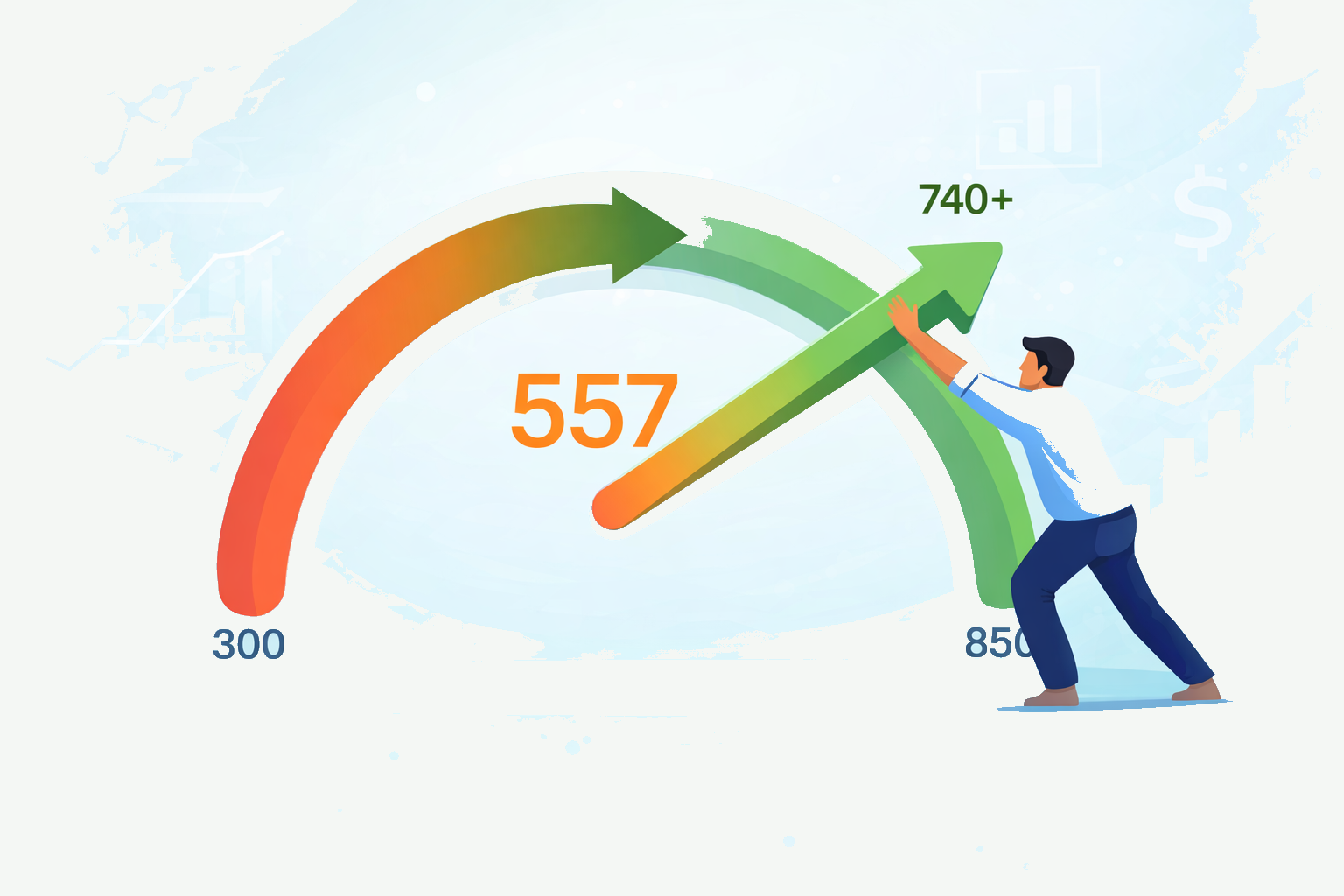
Upload your credit report and our Credit Analyzer identifies exactly what is holding your score back and gives you a step-by-step 90-day plan to reach 740+.
Trusted by 500+ successful placements and excellent reviews on TrustPilot ★★★★★
Analyze My Credit Free →