Scaling Business Credit for Entrepreneurs: The SSN to EIN Transition
Stop funding your startup with personal cards. Learn how to build an EIN-only credit profile that protects your personal FICO and increases borrowing power.
TLDR
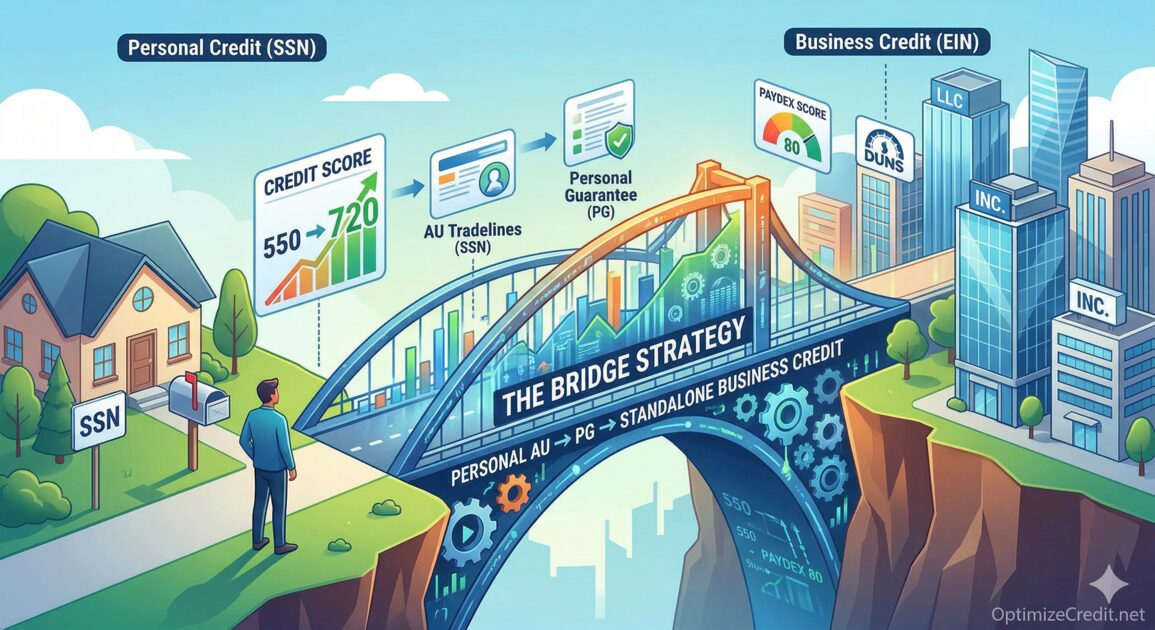
The transition from personal to business credit allows entrepreneurs to separate corporate liabilities from their personal FICO scores. By building credit under an Employer Identification Number (EIN) using vendor tradelines (Net-30) and business-only revolving cards, founders can fund growth without spiking personal utilization. This separation is critical for maintaining mortgage eligibility and protecting personal assets from business-related credit drops.
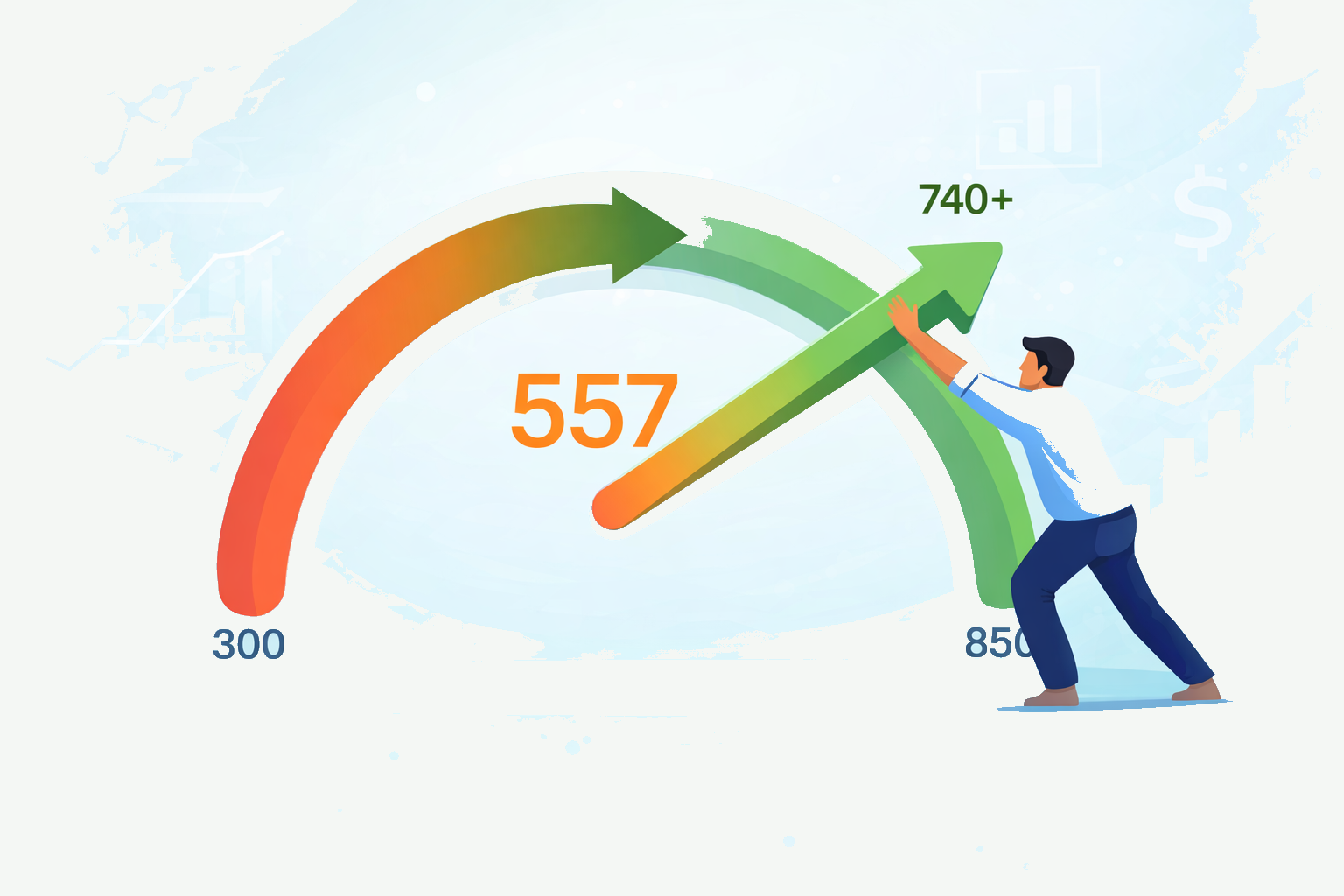
Most entrepreneurs fund their first two years of growth using personal credit cards. It is the fastest way to get capital, but it is also the fastest way to kill your personal mortgage eligibility. When you put $20,000 of inventory on a personal card with a $25,000 limit, your personal FICO score can drop 80+ points due to utilization, even if the business is profitable. The goal of this life transition is to move your corporate spend from your SSN to your EIN.
The Entrepreneur's TL;DR
›Personal Guarantee (PG): Most 'business' cards still report to your personal file.
›The EIN Pivot: Build history with Net-30 vendors to generate a PAYDEX score.
›Utilization Shield: EIN-only cards do not show up on your personal credit report.
Before you apply for business credit, your business must look like a standalone entity to bank algorithms. This means having a registered LLC or Corp, a federal EIN, a dedicated business phone number, and a physical business address (not a P.O. Box). Without these, your applications will be flagged as high-risk or fraudulent.
Step 2: Vendor net-30 accounts — your first reportable tradelines
Vendor net-30 accounts are trade-credit relationships where a supplier ships you product on terms (pay in 30 days) and reports your payment behavior to the business credit bureaus. They are the fastest way to build an EIN business credit builder profile because most vendors approve based on business basics rather than credit history.
The standard starter list includes Uline, Quill, Grainger, and Crown Office Supplies. Open 4 to 6 of these, use them for normal business purchases, and pay early. Plan on 90 to 120 days from first vendor account to a usable PAYDEX 80.
Step 3: True no-PG corporate cards
Once you have established history, you can qualify for true no-personal-guarantee corporate cards from fintechs like Brex, Ramp, or Bill. These underwrite based on your business's bank balance and revenue, not your personal FICO score. Every dollar of business spend that flows through one of these cards is invisible to your personal credit file, protecting your personal FICO for your next home or auto purchase.
Credit education focused on reporting, utilization, and responsible expectations · Editorial approach
Free Tool
Get Your Personalized Credit Roadmap
Upload your credit report and our Credit Analyzer identifies what may be holding your score back and provides a step-by-step report-based improvement plan.
Yes, but it requires a structured multi-step process. You must first establish a 'credible' business identity with an EIN and DUNS number, then build history with 'starter' vendors (Net-30) before applying for larger corporate cards that do not require an SSN link.
Initially, yes. Most 'small business' cards still use a personal guarantee and report to personal bureaus. To scale to 'true' business credit (EIN-only), you need to follow a sequence of building corporate history so the business can stand on its own creditworthiness.
Yes for D&B-side reporting. The DUNS number is Dun and Bradstreet's 9-digit business identifier and is required for the PAYDEX score to exist. It is free at dnb.com and takes 1 to 30 days to issue. SAM.gov federal contracting also requires it. You can build Experian Business and Equifax Business profiles without a DUNS, but PAYDEX is the most-cited business credit score, so the DUNS is foundational.
Plan on 90 to 120 days from first vendor account to a usable PAYDEX 80. The fastest path: open 4 to 6 vendor net-30 accounts (Uline, Quill, Grainger, Crown Office Supplies, Summa), use them for normal business purchases, pay early or on time, and confirm each vendor reports to D&B, Experian Business, or Equifax Business. The PAYDEX 80 threshold unlocks better vendor terms and most no-PG corporate-card upgrades.
No. The card reports to the personal credit bureaus regardless of how the IRS treats the expense for tax purposes. Tax deductibility and credit reporting are separate questions. A personal card used for business purchases shows up on Equifax, Experian, and TransUnion as personal revolving debt, with all the utilization and payment-history consequences.
An EIN is your federal tax ID issued by the IRS, required for payroll and taxes. A DUNS number is a 9-digit commercial identifier issued by Dun & Bradstreet, required to build a PAYDEX score. You need both to establish true corporate credit.
Yes, but it is inherently risky. Without an LLC or Corporation structure, you are personally liable for all business debts, meaning 'business credit' still puts your personal assets at risk. Lenders strongly prefer registered entities for professional-grade credit lines.
Only if they report to the personal credit bureaus. Most true business cards (like those from Chase or Amex) only report to commercial bureaus unless you default. Capital One and Discover, however, commonly report business balances to personal files. Always check the issuer's reporting policy before spending.